Spandau Ballet — I'll Fly For You
JUL 01 1984 · 12:00
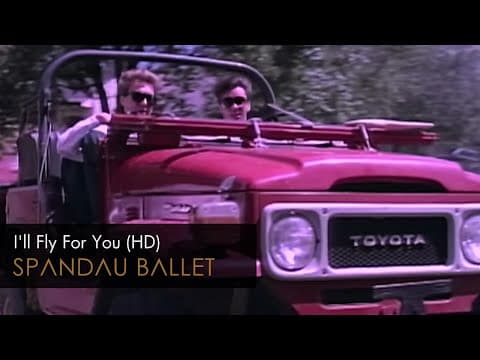
Spandau Ballet — I'll Fly For You (1984) Director: Simon Milne Era: Second British Invasion / New Wave Soul Transition (1984) - Mid-decade pivot from New Romantic glitter toward cinematic, location-shot soul-pop production with narrative ambition A high-value archival document capturing Spandau Ballet at their commercial and artistic peak, with confirmed director attribution and a richly sourced production history. The New Orleans location shoot, Mardi Gras integration, and narrative ambition make this a textbook example of the escalating cinematic ambition of mid-budget British promo production in 1984. The HD remaster preserves the original film grain and warm palette, making it particularly useful for colour-grading and visual style research. Context: Released in August 1984, 'I'll Fly for You' sits at the inflection point where Spandau Ballet — founding figures of the Blitz/New Romantic scene — had fully transitioned into polished, adult-oriented soul-pop. The choice to film in New Orleans was emblematic of the era's fascination with American location shoots as signifiers of international reach and cinematic legitimacy, a trend shared by contemporaries including Duran Duran (who shot in Sri Lanka and Antigua). The Mardi Gras setting provided an externally exotic, visually rich canvas for what was fundamentally a restrained, emotionally mature romantic song, reflecting the band's deliberate move away from the glitter and artifice of their early Reformation-era recordings toward the sleek sophistication of the Parade album. Director notes: Milne directed 'I'll Fly for You' as a continuation of his working relationship with Spandau Ballet, having previously directed 'Only When You Leave.' Wikipedia confirms the band traveled to New Orleans for the shoot. The video incorporates a Mardi Gras parade into its storyline, blending location documentary energy with a fictional lovers-on-the-run narrative including a courtroom drama sequence. The band's principal creative driver Gary Kemp described the intent as not wanting the result to look like a travelogue, per Number One magazine (cited in Wikipedia).
Source: radarchive.org
Part of RAD Archive · Watch in the documentary