Ray Parker Jr. — Ghostbusters
JUL 01 1984 · 12:00
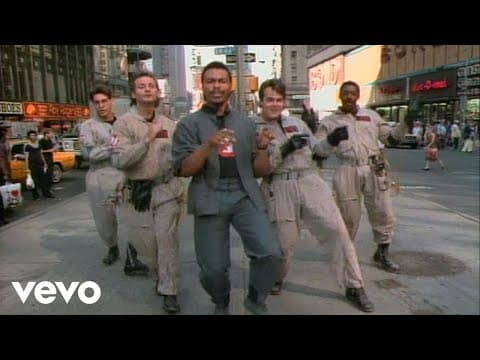
Ray Parker Jr. — Ghostbusters (1984) Director: Ivan Reitman Era: MTV Golden Age (1984) - Peak blockbuster tie-in era; music video as Hollywood promotional vehicle, concurrent with the summer of 1984's record-breaking theatrical releases and MTV's rapid cultural ascendance. An essential artifact of the 1984 summer blockbuster cultural moment and a key document in the history of MTV's racial integration. The video's production history — improvised direction by a major Hollywood filmmaker, guerrilla celebrity cameo shoots, and a street-closing Times Square finale — makes it exceptionally rich for both production studies and cultural history research. Its dual status as a chart-topping single and a film promotional tool renders it one of the most studied examples of 1980s media convergence. Context: Released in the summer of 1984 alongside the highest-grossing film of that year, this video occupies a pivotal position in both music video and Hollywood promotional history. It was among the first film-themed videos to achieve heavy MTV rotation and chart dominance simultaneously, with the song reaching No. 1 on the Billboard Hot 100 for three weeks. Crucially, the video helped break racial barriers in MTV's programming at a moment when Black artists faced systematic exclusion from the channel — Ray Parker Jr. himself identified it alongside Michael Jackson's 'Thriller' as one of the first two videos by Black artists to shift MTV's gatekeeping norms. The celebrity cameo format, assembled through Reitman's Hollywood relationships, established a template for star-studded promotional videos that leveraged film industry social capital rather than music industry convention alone. Director notes: The video was shot at A&M Studios in Hollywood (the former Charlie Chaplin Studios). The production had no designated music video director; Reitman informally assumed directorial control on the day of the soundstage shoot. The haunted-house set was still under construction when filming began. A glass-painting technique — in which an artist painted directly on glass positioned in front of the set — was used to create the distinctive drawn/illustrated look of the interior scenes. Reitman personally recruited an extensive roster of celebrity cameos as favors from his industry network, including a guerrilla shoot on the set of another film to capture John Candy's segment. The video climaxes with a street performance on Broadway near Times Square, which was closed to traffic for the shoot during a press junket for the film. Reitman told Parker on set that it would be a famous video and that he had never directed a music video before and would never do so again.
Source: radarchive.org
Part of RAD Archive · Watch in the documentary