Red Hot Chili Peppers - Aeroplane
JUL 01 1996 · 12:00
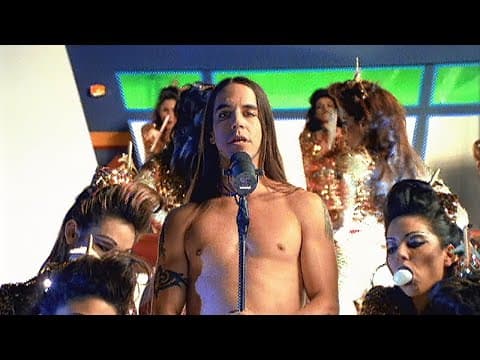
Red Hot Chili Peppers - Aeroplane (1996) Director: Gavin Bowden Era: Post-Grunge Alternative Rock Peak (1995–1996) - Mid-90s major-label spectacle era; RHCP's Dave Navarro lineup, riding the commercial momentum of Blood Sugar Sex Magik into lavish studio-produced video budgets High curatorial value as a documented artifact of RHCP's most contested lineup era, and as one of rock music video history's most committed and fully realized homages to Busby Berkeley's cinematic choreography. The video's internal contradictions, lavish production paired with band dissatisfaction, Hollywood glamour grafted onto a funk-rock performance context, make it a rich object for cultural and production history research. Its inclusion on the Greatest Hits DVD despite omission of the song from the compilation itself further underscores its visual significance within the RHCP canon. Context: Released in February 1996 as the third single from One Hot Minute (1995), 'Aeroplane' arrived during a transitional and commercially complicated chapter in RHCP's history, the sole album featuring guitarist Dave Navarro following John Frusciante's departure. The video's maximalist, Hollywood-revivalist production represented a sharp aesthetic departure from the band's prior lo-fi desert and street-level video work ('Give It Away,' 'Under the Bridge'). Its Busby Berkeley-derived visual language was a deliberate invocation of 1930s, 50s Hollywood aquatic spectacle at a moment when MTV was rewarding high-production-value concept videos. Despite its visual ambition, the video was met with ambivalence from band members and is a document of the creative friction inherent in the One Hot Minute era. Director notes: Bowden directed this elaborately staged production for Warner Bros. Records in early 1996 as the third single from One Hot Minute. The video was visually inspired by Busby Berkeley's Golden Age Hollywood choreography, making direct homages to films including 42nd Street (1933), Bathing Beauty (1944), Million Dollar Mermaid (1952), and Easy To Love (1953). Production involved a large-scale interior set featuring a pool, trapeze rigging, and dozens of costumed dancers in gold sequined bodysuits. During filming, a band member fell approximately 20 feet from a trapeze into the pool after a rope broke, an incident Bowden himself recounted, noting it ended his working relationship with the band. Both Anthony Kiedis and Chad Smith publicly expressed dissatisfaction with the final video.
Source: radarchive.org
Part of RAD Archive · Watch in the documentary