Ultravox — Vienna
JUL 01 1981 · 12:00
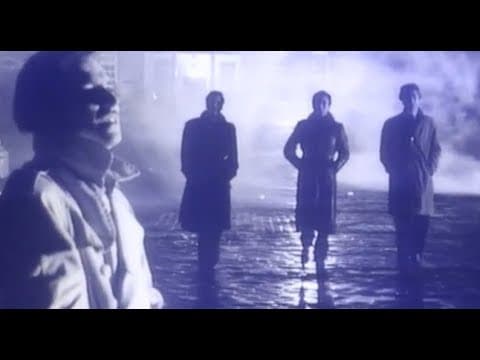
Ultravox — Vienna (1981) Director: Russell Mulcahy Era: New Romantic / Synth-Pop Dawn (1980–1981) - The transitional moment when British post-punk art rock fused with European electronic classicism to birth a cinematic, fashion-conscious pop movement rooted in urban melancholy and Cold War aesthetics. Exceptionally high. 'Vienna' by Ultravox, directed by Russell Mulcahy in 1981, is a primary archival document in the history of the music video as an art form. It is one of the earliest and most fully realised examples of the narrative promo, produced independently against label resistance, and its visual language directly seeded the MTV era. The video's synthesis of European noir cinema, New Romantic fashion, and synth-pop grandeur makes it an irreplaceable artefact for researchers of 1980s popular culture, music video history, and British subcultural aesthetics. Context: Released as a single on 9 January 1981, 'Vienna' arrived at the precise moment British post-punk was crystallising into the commercially viable New Romantic and synth-pop movements. Chrysalis Records had considered the track too long and too slow for radio, but the band self-funded the Mulcahy video which proved decisive in breaking the song commercially — it spent four consecutive weeks at number two on the UK Singles Chart, famously held off the top spot by Joe Dolce's 'Shaddap You Face'. The video's cinematic language — noir shadows, European location footage, theatrical costume — connected with the Blitz Kids scene and a generation of British youth who saw European art-house sensibility as an antidote to both punk's rawness and disco's hedonism. The song and video together helped legitimise the 'serious' pop promo as an art form and presaged the entire MTV aesthetic of the early 1980s. Director notes: Mulcahy directed 'Vienna' in 1981 as Ultravox's second promotional video, following 'Passing Strangers' (also Mulcahy). The production was entirely self-funded by the band at a cost of £6,000–£7,000 after Chrysalis Records refused to finance it. Approximately half of the shoot took place across two to three days in London, primarily at Covent Garden Market and the old Kilburn Gaumont Theatre in North London (then a bingo hall), as well as a rented house used for the embassy party scene. A minimal crew — Mulcahy, one cameraman, a make-up artist, and a technician — flew to Vienna for a single overnight trip to capture authentic location footage. The finished video is widely noted as evocative of Carol Reed's 1949 film The Third Man, a reference that also colored interviews Midge Ure gave about the song's inspiration. The video is cited by multiple sources as one of the first 'mini-movie' music promos, helping to establish the narrative-cinematic format that would define the MTV era. A tarantula crawling across a face in one scene features director Julien Temple as the subject.
Source: radarchive.org
Part of RAD Archive · Watch in the documentary