R.E.M. - Bang And Blame
JUL 01 1994 · 12:00
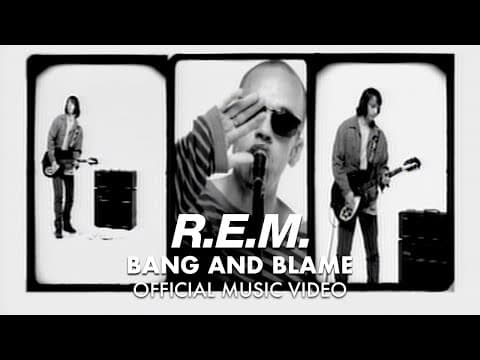
R.E.M. - Bang And Blame (1994) Director: Randy Skinner Era: Alternative Rock Peak / Post-Grunge Mainstream (1994) - R.E.M.'s electric pivot on Monster coincides with alternative rock's commercial apex; MTV still functions as primary visual delivery mechanism for rock acts. High curatorial value as a technically distinctive artifact of the 1994 alternative rock MTV era. The split-screen triptych is a rare and documented formal innovation in the Monster promotional campaign, directly sourced to the director's stated artistic intent. As R.E.M.'s last chart-topping Modern Rock single and final Hot 100 top-40 entry, the video holds both commercial-historical and aesthetic significance. The contrast between Skinner's predominantly theatrical/Broadway career and his music video output makes this a compelling case study in cross-disciplinary directorial practice. Context: Released October 31, 1994, 'Bang and Blame' arrived as the second single from R.E.M.'s ninth studio album Monster, a deliberate, career-redefining pivot from the acoustic introspection of Out of Time and Automatic for the People toward distorted electric guitars and a grungier sonic palette. The video's split-screen triptych format reflects the period's MTV-driven experimentation in promo form, resisting the dominant narrative-clip model in favor of a visually fragmented, photographer-influenced composition. The single reached number one on the Billboard Modern Rock Tracks chart and peaked at number 19 on the Hot 100, making it R.E.M.'s last top-40 entry on that chart. The 1994 release context situates it squarely within alternative rock's commercial peak and the final years of MTV as an unchallenged tastemaker for rock music. Director notes: Skinner conceived the video's signature split-screen triptych structure, dividing the frame into three simultaneous windows showing different angles and compositions of the band's performance. He attributed this visual approach directly to his still-photography background and his 'affinity for framing multiple images and putting things in boxes.' He described R.E.M. as collaborators willing to take chances and not interested in following existing promo formulas. The technique was explicitly designed to incorporate performance footage while avoiding a traditional single-frame format. The video was noted by uDiscover Music as arguably the best of the Monster album campaign's five promo clips.
Source: radarchive.org
Part of RAD Archive · Watch in the documentary