Wolf Parade - Modern World
2006
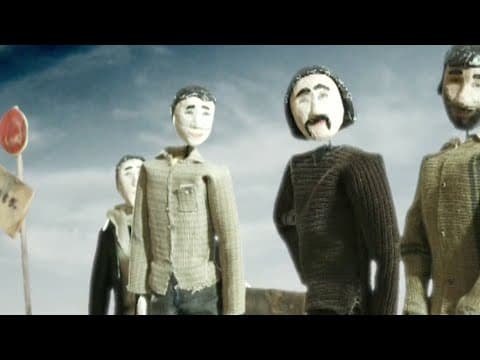
Wolf Parade - Modern World (2006) Director: Adam Bizanski Era: Mid-2000s Canadian Indie Boom (2005–2006) - Stop-motion animated video tied to Sub Pop debut album cycle; released during the height of Montreal indie rock's global visibility High curatorial value as a rare, fully documented single-artist stop-motion production from the mid-2000s indie peak. The Brooklyn Film Festival exhibition record provides unusually granular production provenance, camera, software, timeline, and conceptual intent, making this video an exceptional case study for animation history, music video studies, and Canadian indie rock cultural preservation. Its industrial allegory gives it lasting thematic relevance beyond its era. Context: Released in 2006 as a music video for a track from Wolf Parade's landmark debut album 'Apologies to the Queen Mary' (Sub Pop, 2005), 'Modern World' arrives at the apex of a Montreal indie rock scene that, alongside Arcade Fire, had repositioned Canadian alternative music on the global stage. The video's stop-motion industrial allegory, machines displacing human musicians on a factory floor, resonates directly with the song's themes of alienation and anti-modernity. Produced entirely by a single artist over five months using handbuilt puppets, the video exemplifies the DIY craft ethos that defined Sub Pop's mid-2000s visual identity and the broader indie music video economy before YouTube monetization reshaped production budgets. Director notes: Bizanski directed 'Modern World' as a stop-motion animation re-imagining 1968 as a pivotal moment for industry and creativity, with the band depicted as a 'factory house band' made obsolete by machines. The production spanned five months, roughly split between puppet construction and set-building, then filming and editorial. Shot on a Nikon D70s DSLR at 24fps, with post-production in Adobe AfterFX and Premiere Pro, alongside Stop Motion Pro software. Sets and puppets were built by Bizanski himself using materials including cogs, pistons, office supplies, and reclaimed electrical parts. The concept evolved around the song's lyrical imagery of automation and alienation from the modern industrial world.
Source: radarchive.org
Part of RAD Archive · Watch in the documentary