Spandau Ballet — Fight for Ourselves
JUL 01 1986 · 12:00
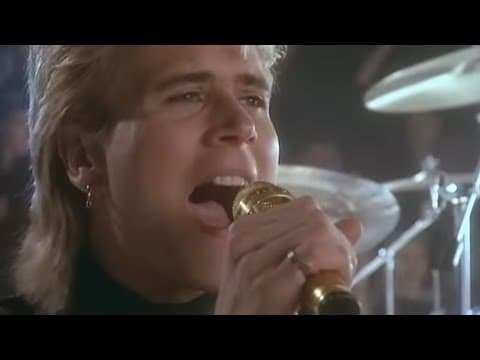
Spandau Ballet — Fight for Ourselves (1986) Director: Simon Milne Era: Mid-80s New Wave Rock Pivot (1986) - Transitional moment for British new wave acts abandoning synth-pop polish for harder rock aesthetics, concurrent with post-Live Aid arena-rock ambitions and a shifting UK singles market. A rare document of Spandau Ballet at a pivotal commercial and artistic inflection point — commercially underperforming yet aesthetically ambitious — making it more historically instructive than their chart-topping earlier videos. The confirmed Simon Milne direction adds auteur continuity to a filmable arc of mid-80s UK promo work. The chroma key technique and dual-narrative construction give this video specific technical interest for archivists studying pre-digital special effects in the British music video industry. Context: Released 14 July 1986 as the lead single from 'Through the Barricades', 'Fight for Ourselves' represents Spandau Ballet's deliberate attempt to shed the soft-focus sophisti-pop of 'True' (1983) and reposition as a rock band — a pivot co-produced with Gary Langan (engineer for Trevor Horn) recorded at Musicland Studios, Munich. The single peaked at #15 in the UK, their first lead single from any album to miss the top 10, signalling audience resistance to the rebrand. The video's concert-infiltration narrative mirrors the band's own desire to close the distance between studio artifice and live energy, a tension publicly articulated by songwriter Gary Kemp. The 1986 moment sits between the post-Live Aid democratisation of stadium spectacle and the rise of harder rock aesthetics challenging new wave dominance on UK charts. Director notes: Confirmed directorial credit via Wikipedia's dedicated 'Fight for Ourselves' article and corroborated by burningtheground.net. The video employs a dual-strand structure: a narrative thread following two young women sneaking into a Spandau Ballet concert, intercut with performance footage of the band. A notable in-camera/post trick — chroma key compositing — is used to create disappearing and reappearing sequences, a sophisticated effect for a mid-budget UK promo of this period. Exterior concert venue shots were filmed at 43 King Street, Covent Garden, London. The rapid editing pace (avg. 1.64s shot length, 164 scene changes) is consistent with Milne's established kinetic multi-camera style seen in his earlier Duran Duran and Spandau Ballet work.
Source: radarchive.org
Part of RAD Archive · Watch in the documentary