Dwight Yoakam — It Only Hurts When I Cry
JUL 01 1991 · 12:00
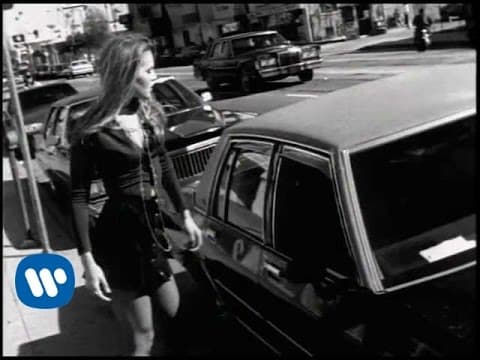
Dwight Yoakam — It Only Hurts When I Cry (1991) Director: Piers Plowden Era: Neo-Traditional Country Renaissance (1991) - Peak of the Bakersfield-influenced country revival, during which Yoakam bridged hardcore honky-tonk roots with mainstream country chart success on the back of his fourth studio album If There Was a Way. High curatorial value as a documented, director-confirmed, genre-defining artifact from the commercial peak of neo-traditional country's early 1990s renaissance. The confirmed black-and-white treatment and rapid-cut performance structure make it a textbook example of intentional aesthetic traditionalism in music video form. Its co-authorship connection to Roger Miller and its chart performance (#7 US, #4 Canada) give it both cultural and archival significance. A strong candidate for inclusion in any retrospective of early-1990s country music video aesthetics or the Piers Plowden directorial catalog. Context: Released in December 1991, this video arrived at the apex of neo-traditional country's commercial dominance, when artists like Yoakam, Clint Black, and Travis Tritt were reclaiming the country charts from the pop-crossover era. Co-written with Roger Miller — one of the last songs Miller completed before his October 1992 death — the track carries a particular elegiac weight. The black-and-white visual treatment consciously positioned Yoakam within the lineage of Buck Owens and Merle Haggard's Bakersfield Sound, distinguishing him from the glossier Nashville mainstream. The single peaked at #7 on the U.S. country charts and #4 in Canada, confirming sustained mainstream commercial traction alongside Yoakam's critical credibility as a traditionalist purist. Director notes: Plowden's directorial choice to shoot entirely in black and white is the video's defining production decision, documented by multiple sources including Wikipedia and IMVDb. The aesthetic aligns with the high-contrast (65.36), near-zero saturation (9.47) quantitative signature extracted from the video file. The rapid editing pace (81 cuts, ~1.91s avg. shot length) within a restrained, low-motion (9.72) visual framework is consistent with a tightly choreographed single-location performance shoot on film stock under tungsten stage lighting. The black-and-white treatment explicitly echoes the visual language of classic country and Western entertainment television of the 1950s–60s, reinforcing Yoakam's neo-traditionalist brand identity.
Source: radarchive.org
Part of RAD Archive · Watch in the documentary