Queen — Radio Ga Ga
JUL 01 1984 · 12:00
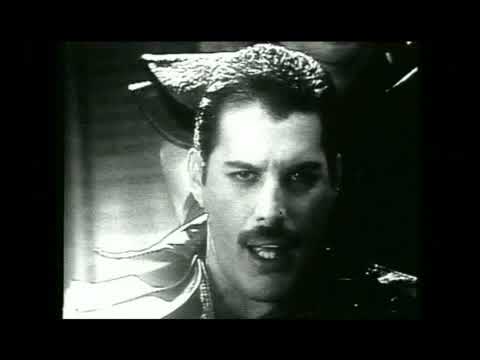
Queen — Radio Ga Ga (1984) Director: David Mallet Era: MTV Golden Age / New Wave Synth-Pop Peak (1984) - Era of explosive music video culture, synth-driven arena rock, and Cold War anxiety; Queen pivots from hard rock toward synth-pop spectacle amid the rise of MTV as primary promotional medium. Tier-1 canonical artifact of music video history. 'Radio Ga Ga' is simultaneously a primary source for MTV's early programming culture, a document of Queen's artistic evolution, a case study in licensed archival film integration, and a record of one of the most enduring audience-participation rituals in live rock history. Its self-reflexive meditation on media — a music video critiquing the music video era — gives it rare meta-textual significance for scholars of popular culture, media history, and performance studies. Context: Released on January 16, 1984, 'Radio Ga Ga' occupies a uniquely self-reflexive position in music video history: a video about the displacement of radio by television and MTV, broadcast heavily on MTV itself. Written by drummer Roger Taylor as a nostalgic defense of radio as a dying medium, the song's thesis was ironically amplified by its lavish, high-concept video. The Metropolis homage layered Cold War anxieties — gas masks, wartime shelter, dystopian crowd uniformity — over a commentary on mass media consumption. The video's choreographed audience hand-clap became a live performance phenomenon, most famously at Live Aid (July 13, 1985) where 72,000 fans at Wembley Stadium replicated the sequence spontaneously. Lady Gaga has publicly cited the song as the direct inspiration for her stage name. Director notes: The video was filmed at Carlton TV Studios and Shepperton Studios, London, between 23–24 November 1983 and January 1984. Mallet integrated licensed footage from Fritz Lang's 1927 silent film Metropolis — rights secured after Freddie Mercury contributed his solo track 'Love Kills' to Giorgio Moroder's restored version of the film. Mallet deliberately moved away from standard performance-piece formats. A large crowd of extras performed the now-iconic synchronized hand-clapping routine on the first take, despite never having heard the song prior to filming. The video closes with the on-screen acknowledgment 'Thanks To Metropolis.' It received a Best Art Direction nomination at the 1984 MTV Video Music Awards.
Source: radarchive.org
Part of RAD Archive · Watch in the documentary