Madonna — Lucky Star
JUL 01 1984 · 12:00
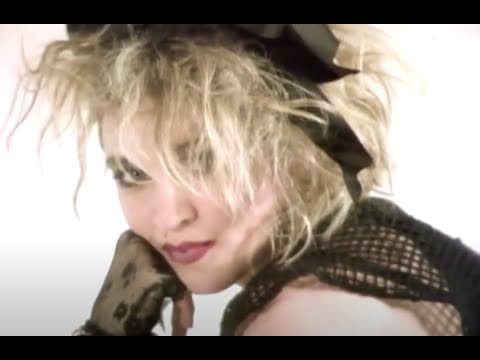
Madonna — Lucky Star (1984) Director: Arthur Pierson Era: Early MTV Era (1983–1984) - Pre-stardom breakout period of Madonna's debut album campaign; video shot February 1984 in Los Angeles amid the first wave of MTV's cultural dominance and the rise of the music video as a primary pop marketing tool. Tier-1 canonical artifact of early MTV pop culture. 'Lucky Star' is one of a small number of music videos that demonstrably altered mainstream fashion, drove a #4 Billboard chart position through video rotation alone, and established a visual template widely replicated throughout the decade. It is essential to any archival collection focused on 1980s pop, music video history, Madonna studies, or the cultural history of MTV. Referenced in Pulp Fiction (1994) and Modern Family, it has achieved broad cross-generational recognition extending well beyond its original release context. Context: Released into an MTV landscape hungry for telegenic pop performers, 'Lucky Star' became a defining artifact of the early music video era. Produced for just $14,000 and shot in a single afternoon, the video's stark white void transformed budget limitation into aesthetic purity. MTV's heavy rotation drove the single to #4 on the Billboard Hot 100 — Madonna's first top-five hit — demonstrating the emerging power of video as a promotional and cultural force. The video is widely credited with igniting the 'Madonna Wannabe' fashion phenomenon, as her thrift-store assemblage of crucifixes, rubber bangles, lace gloves, and exposed midriff was rapidly adopted by a generation of young fans. Scholars have noted the video's self-referential, narcissistic construction: Madonna plays at least four distinct character modes while addressing both lover and audience simultaneously, positioning herself as the 'lucky star' of the title rather than its object. Director notes: Shot in Los Angeles in February 1984, produced by Glenn Goodwin, with Wayne Isham as director of photography and Christopher Willoughby as editor. Pierson was brought in as a last-minute replacement for Mary Lambert. Warner Bros. gave him a small budget and the video was reportedly shot in a single afternoon on a white cyclorama stage. The resulting minimalist aesthetic — Madonna and two dancers performing against a pure white void, bookended by black-and-white sunglasses shots — was a product of budget constraint that became a defining visual signature. MTV placed the video in heavy rotation, directly driving the single to #4 on the Billboard Hot 100 and making it Madonna's first top-five hit. The 'Immaculate Collection' (1990) VHS/DVD release features a longer cut of the video than the original release.
Source: radarchive.org
Part of RAD Archive · Watch in the documentary