Robert Palmer — Addicted To Love
JUL 01 1986 · 12:00
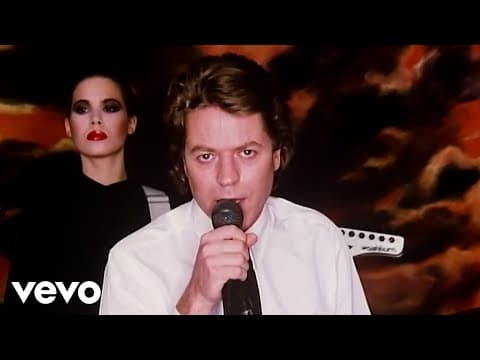
Robert Palmer — Addicted To Love (1986) Director: Terence Donovan Era: MTV Golden Era (1986) - Peak of music video as an art form and marketing instrument; high-concept studio performance aesthetic dominates the channel's heavy-rotation programming Exceptionally high. One of the most cited and imitated music videos of the 1980s, confirmed #3 on VH1's Top 20 Videos of the 1980s. Serves as a primary source document for the convergence of fashion photography, postmodern performance aesthetics, and MTV's commercial machinery. The Terence Donovan directorial intent letter provides rare archival insight into the conceptual origins of an iconic visual work. Essential holding for any archive covering 1980s visual culture, music video history, or the MTV era. Context: Released in 1986 at the height of MTV's cultural dominance, 'Addicted to Love' arrived during the channel's formative years when a visually striking video could single-handedly break a song commercially. The video's aesthetic draws heavily on Patrick Nagel's graphic femme illustration style — hyper-stylised, flat, and decorative — translating a visual art movement into a music video grammar. The model-band conceit inverts conventional rock performance authenticity, replacing musicianship with fashion-tableau spectacle. The song topped the Billboard Hot 100 on May 3, 1986, a chart position the video's MTV heavy rotation directly enabled. Its influence is demonstrable: the model-band format was parodied by numerous artists including Shania Twain, Weird Al Yankovic, and referenced in the 2003 film Love Actually, confirming its status as a singular visual meme of 1980s pop culture. Palmer's 1986 song and video came to be described as epitomising 'the glamour and excesses of the 1980s.' Director notes: Shot in a single day at a studio in Holborn, London in 1986. Donovan authored a production letter of intent describing his concept as desiring a 'throbbing satanic quality' with a pure performance structure, arguing the music's strength required no narrative relief. He conceived the uniform model-band visual from scratch, coordinating with a glamour makeup artist for the signature slicked-hair, red-lipstick look. A musician was reportedly hired to teach the models basic fingering but left after approximately an hour. The video won Best Male Video at the 1986 MTV Video Music Awards and placed #3 on VH1's Top 20 Videos of the 1980s. Donovan also noted the need to structure any 20-second excerpt as independently powerful, anticipating fragmented broadcast consumption. He passed away in November 1996.
Source: radarchive.org
Part of RAD Archive · Watch in the documentary