Timbuk 3 — The Future's So Bright
JUL 01 1986 · 12:00
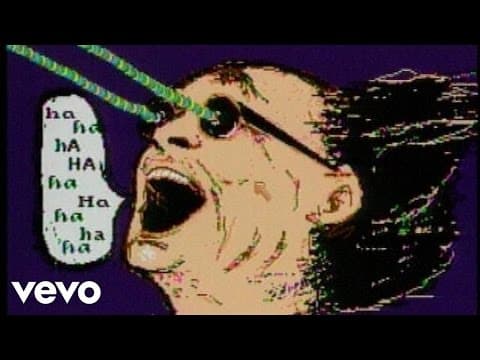
Timbuk 3 — The Future's So Bright (1986) Director: Carlos Grasso Era: MTV Golden Era (1986) - Peak MTV new wave/alt-pop crossover moment; IRS Records indie-to-mainstream pipeline at its apex, Cold War irony embedded in pop form This video is a high-priority archival artifact: a rare convergence of chart success, political subtext, directorial ingenuity, and cultural misreading. It documents the IRS Records ecosystem at its creative peak, provides a primary source for the study of satirical pop, and showcases an early example of mixed live-action/animation technique in the music video form. Its nomination for MTV's Best New Artist Video and the band's Grammy nomination mark it as a canonically significant document of 1986 MTV-era alternative culture. Context: Released in 1986 at the height of Cold War nuclear anxiety and the Reagan-era prosperity paradox, 'The Future's So Bright, I Gotta Wear Shades' was widely — and ironically — misread as an optimistic graduation anthem. Pat MacDonald has stated the song was in fact a 'grim' satire about nuclear scientists enabling annihilation while remaining indifferent to it. The video's IRS Records provenance situates it within the label's broader project of packaging politically-charged alt-rock for mainstream MTV consumption. The visual strategy of blending desolate Americana imagery with frenetic animation enacts the song's irony visually, making it a rare instance of form and content achieving satirical alignment. The duo's Grammy nomination for Best New Artist in 1987 and the video's MTV nomination for Best New Artist Video signal the song's commercial breakthrough despite its countercultural underpinnings. Director notes: Grasso directed the 1986 video while embedded at I.R.S. Records, the label that released Timbuk 3's debut album 'Greetings from Timbuk3.' His approach contrasts black-and-white footage of the duo Pat and Barbara MacDonald performing outside an RV in a desert setting with intensely colorful, psychedelic animation sequences. This visual strategy — sparse documentary realism against saturated abstraction — mirrors the song's own ironic tension between surface optimism and dark satirical intent. The video was nominated for MTV's Best New Artist Video, consistent with the Grammy nomination Timbuk 3 received for Best New Artist in 1987. The production reflects Grasso's dual background in graphic design and filmmaking, with the animated segments bearing hallmarks of his art-direction sensibility honed across hundreds of IRS Records visual assets.
Source: radarchive.org
Part of RAD Archive · Watch in the documentary