REO Speedwagon — Take It On The Run
JUL 01 1981 · 12:00
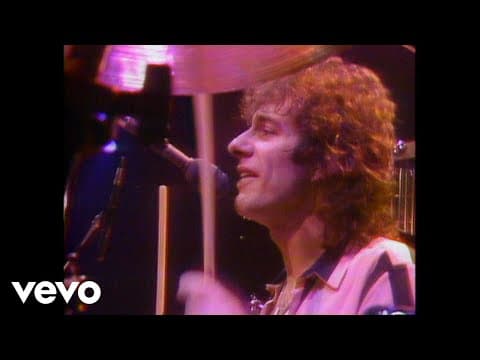
REO Speedwagon — Take It On The Run (1981) Director: Jay Dubin Era: MTV Launch Era (1981) - One of the earliest music videos produced for broadcast, debuting on MTV's inaugural day and representing the dawn of the video age for mainstream rock. Exceptionally high. This video is not merely a REO Speedwagon artifact — it is a primary document of the birth of MTV, having been among the nine videos broadcast on August 1, 1981. Its technical austerity (2 cuts, ~118s avg shot length, dark tungsten-lit staging) makes it a pure, unmediated record of early music video production philosophy. The catastrophic on-air technical failure during its MTV debut adds further historical and archival weight. Tier 1 preservation priority. Context: Released in 1981 as the follow-up single to REO Speedwagon's chart-topping 'Keep On Loving You,' this video arrived at the precise moment of MTV's birth. Its inclusion in the network's inaugural nine-video rotation on August 1, 1981, places it at the absolute origin point of the music video era as a mass-media form. The song's themes of romantic suspicion and infidelity resonated with a broad AOR audience, helping Hi Infidelity become one of the best-selling albums of 1981. The video's austere, performance-focused aesthetic — minimal edits, dark staging, near-static camera — reflects both the era's limited video production infrastructure and a pre-MTV philosophy of 'let the band play.' Director notes: This video holds extraordinary historical significance as one of the nine videos aired on MTV's first broadcast day, August 1, 1981. The clip suffered a technical failure just 12 seconds into its MTV debut, going to black before completion — making this artifact both a foundational and famously ill-fated piece of music video history. The quantitative metadata (only 2 scene changes, avg shot length of ~118 seconds across a 236-second runtime) confirms an extremely minimal editorial approach consistent with early-era performance clips shot on film with limited post-production budgets. The dark, warm, low-contrast visual signature (brightness 41.76/255, color temp 2.53) is consistent with stage or rehearsal-space filming under practical tungsten lighting, a hallmark of Dubin's naturalistic performance-capture style from this period.
Source: radarchive.org
Part of RAD Archive · Watch in the documentary