Madness — It Must Be Love
JUL 01 1981 · 12:00
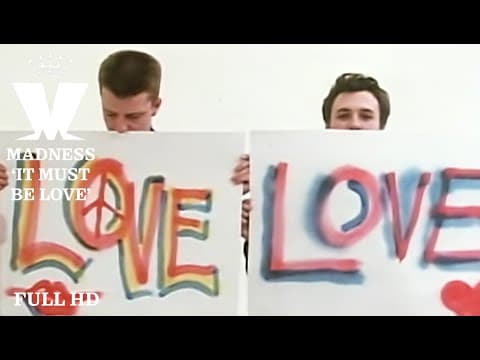
Madness — It Must Be Love (1981) Director: Chris Gabrin Era: British Post-Punk & Ska Revival (1981) - Peak era of the 2 Tone/ska revival movement, with UK new wave acts blending comedic performance with chart ambition on Stiff Records High-value archival artefact representing the commercial and creative apex of British ska-pop in 1981. The video is a primary document of Stiff Records' visual ethos, early Chris Gabrin directorial work, and the broader UK new wave promo tradition. Its multi-environment surrealist staging, original-artist cameo, and fast rhythmic editing make it exemplary for research into early 1980s British music video craft. Tier 1 designation warranted by chart significance (UK #4, 1981), enduring cultural longevity, and density of researchable production and subcultural detail. Context: Released in late 1981 on Stiff Records, 'It Must Be Love' was Madness's cover of Labi Siffre's 1971 original and became their eighth consecutive UK Top 10 hit, reaching number 4 on the UK Singles Chart. The video encapsulates the playful absurdism that defined Madness's visual identity during the peak of the British ska revival, blending slapstick humour with genuine emotional warmth. The cameo by Labi Siffre — the original song's composer — cemented a cross-generational creative respect rarely made so visible in promotional film of the era. The song later gained further cultural traction when it featured in the 1989 film The Tall Guy and reached number 6 upon reissue in 1992, demonstrating its enduring mainstream appeal beyond its original subcultural moment. Director notes: Directed for Stiff Records, 1981. The video is set across multiple environments: a white limbo studio, an outdoor graveyard, and an underwater pool sequence. It opens with a direct-to-camera warning from guitarist Chris Foreman advising viewers not to attempt the underwater stunt. The underwater segment features Foreman and saxophonist Lee Thompson playing their instruments submerged. The original song's writer, Labi Siffre, makes a cameo appearance as a violin player. A killer whale also appears as a surreal visual gag. Cinematography credited to Dick Pope (per IMDb full credits). Produced under Stiff Records.
Source: radarchive.org
Part of RAD Archive · Watch in the documentary