Foxy Brown - Get Me Home
JUL 01 1996 · 12:00
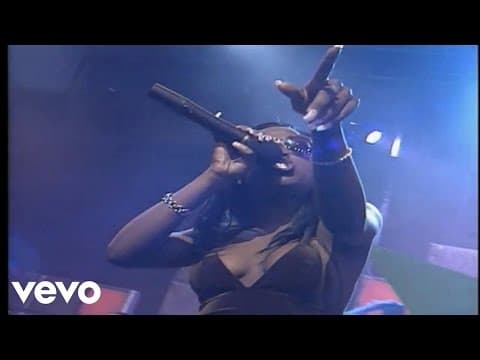
Foxy Brown - Get Me Home (1996) Director: Hype Williams Era: Mid-90s Hip-Hop/R&B Crossover (1996) - Peak commercial rap-meets-R&B era; debut of Foxy Brown on Def Jam/Violator, coinciding with hip-hop's mainstream visual ascendancy on MTV and BET. A high-value archival artifact representing the precise moment of hip-hop's full commercial-visual maturation in 1996. As Foxy Brown's debut video, directed by the era's most important hip-hop visual auteur, it documents the aesthetic, cultural, and industrial infrastructure that produced late-90s mainstream rap. The quantitative fingerprint, warm saturation, fast cutting, moderate motion, encodes the Hype Williams mid-90s template in measurable form, making it a strong anchor for comparative analysis within the MTV REWIND archive. Context: Released in November 1996, 'Get Me Home' arrived at a pivotal inflection point for hip-hop's commercial mainstream crossover. Foxy Brown's debut on Def Jam/Violator positioned her as a female MC challenging male-dominated rap hierarchies, while the Blackstreet collaboration bridged hip-hop's hard edge with New Jack Swing R&B's sensuality, a formula that defined mid-90s radio. Produced by Trackmasters (who also helmed contemporaneous hits for Nas and Mobb Deep) and sampling Eugene Wilde's 1984 soul hit, the record layered nostalgia onto street credibility. The Hype Williams visual treatment amplified this crossover ambition: his signature cinematic maximalism gave the video parity with pop music's production values while retaining hip-hop's urban authenticity, helping propel the song to No. 10 on the Billboard R&B chart. Director notes: The music video for 'Get Me Home' premiered in November 1996 and was in heavy rotation on television music video channels. Per IMDB, the video features Foxy Brown and Blackstreet, opening with shots of Blackstreet driving through a city at night, with additional scenes of Foxy Brown with women in a sauna and clips involving a pool setting. The video exemplifies Williams' signature mid-90s visual language: saturated warm tones, fisheye lens work, theatrical lighting, and fast intercutting between performance and lifestyle vignettes, all deployed in service of a sensual R&B-crossover aesthetic consistent with his contemporaneous work for Def Jam and Bad Boy-adjacent artists. The quantitative data (saturation 85.3, warm color temp 1.56, 78 scene changes at avg 3.5s/shot) aligns precisely with Williams' known production fingerprint for this period.
Source: radarchive.org
Part of RAD Archive · Watch in the documentary