Spice Girls - Say You'll Be There
JUL 01 1996 · 12:00
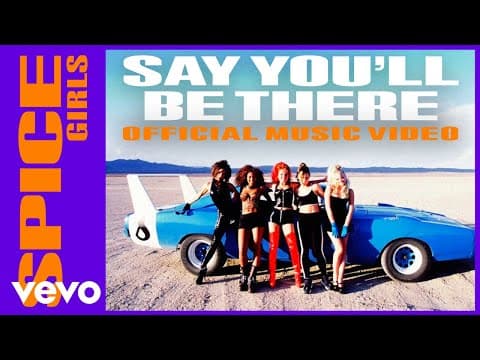
Spice Girls - Say You'll Be There (1996) Director: Vaughan Arnell Era: Britpop & Mid-90s Pop Explosion (1996) - The year British pop conquered global charts; girl-group empowerment rebranded as mass-market Girl Power, propelling the Spice Girls to international dominance on the strength of their second single from debut album 'Spice'. An exceptionally high-value archival artifact representing the precise cultural and aesthetic moment of peak mid-1990s British pop. Confirmed director, documented production dates and location, multiple major award wins, and a richly documented cinematic intertextual framework make this video essential for any serious collection addressing 1990s pop, Girl Power feminism, or the evolution of the music video as cinematic short form. Ranked in VH1's all-time greatest music videos list, it retains enduring canonical status. Context: Released in October 1996 as the second single from the Spice Girls' debut album 'Spice' on Virgin Records, 'Say You'll Be There' arrived at the apex of Britpop's global cultural footprint and the early wave of post-Riot Grrrl mainstream pop feminism. The video's desert-warrior concept, referencing Russ Meyer's exploitation cinema and Tarantino's pop-art violence, grafted countercultural film aesthetics onto a mass-market pop vehicle, rendering feminist iconography of physical power and female solidarity accessible to a global teenage audience. The song became the group's second UK number one and debuted at number five on the US Billboard Hot 100, then a record for any British act. Director notes: Directed by Vaughan Arnell, produced by Adam Saward, and filmed on 7–8 September 1996 in the Mojave Desert, California. The video premiered on October 1, 1996. It was inspired by the films Pulp Fiction (1994) and Faster, Pussycat! Kill! Kill! (1965). The video presents each member of the Spice Girls as a fictional desert techno-warrior character with individually assigned weapons and martial arts styles. Choreography was primarily composed of Goju-style martial arts and karate techniques. The clip opens with theatrical movie-style title credits introducing each character. The video won Best Pop Video at the 1996 Smash Hits! Awards, British Video of the Year at the 1997 Brit Awards, and was nominated for Viewer's Choice at the 1997 MTV VMAs. In January 1999, it was ranked number eight in VH1's 'All-Time Greatest Music Videos in History.'
Source: radarchive.org
Part of RAD Archive · Watch in the documentary