LL COOL J — I Need Love
JUL 01 1987 · 12:00
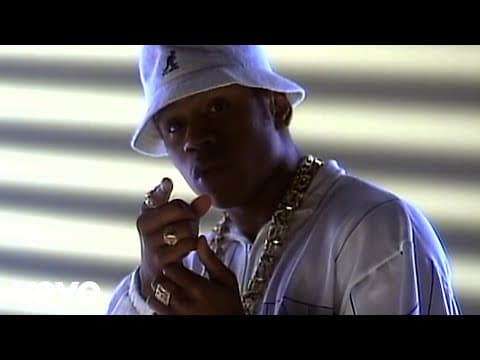
LL COOL J — I Need Love (1987) Director: Rolando Hudson Era: Golden Age Hip-Hop (1987) - Crossover rap ballad era marking hip-hop's first serious foray into mainstream pop/R&B sentiment and MTV visibility Exceptionally high. This video documents the precise cultural moment when hip-hop first publicly embraced romantic vulnerability as an aesthetic stance, directly enabling subsequent decades of crossover rap ballads. Its 1987 origin makes it a primary document in both hip-hop video history and the evolution of MTV's programming relationship with Black music. The confirmed director credit (Rolando Hudson, IMDb) adds production lineage value for the Def Jam visual canon. Context: Released in the summer of 1987, 'I Need Love' arrived at a pivotal moment when hip-hop was pushing aggressively into mainstream pop radio. The video visualizes this crossover ambition by placing LL Cool J in recognizably aspirational scenarios — tour buses, fans, restaurants — more aligned with pop stardom than b-boy street culture. It was among the first rap videos to foreground emotional vulnerability and romantic yearning as its central visual theme, directly challenging the genre's dominant mode of bravado. The song reached #1 on the Hot Black Singles chart and #14 on the Billboard Hot 100, and became one of the first rap songs to chart significantly in the UK, signaling hip-hop's emerging global reach. The video's melodramatic realism helped legitimize rap as a format capable of conveying intimate human emotion on MTV. Director notes: Directed in 1987 to accompany LL Cool J's second single from the album Bigger and Deffer (Def Jam/Columbia). The video presents LL Cool J as a megastar rapper navigating sold-out tours, parties, and screaming fans while yearning for authentic love — a narrative structure that dramatizes the song's central tension between celebrity excess and emotional vulnerability. The fast editing pace (97 scene changes over ~254 seconds, avg shot 2.62s) reflects a montage-driven storytelling approach common to late-80s Def Jam-adjacent productions. Shot in 4:3 aspect ratio on film stock with warm tungsten-dominant lighting (color temp 2.07), the video's visual language is grounded in realism rather than abstraction.
Source: radarchive.org
Part of RAD Archive · Watch in the documentary