Juvenile - Ha
NOV 03 1998 · 12:00
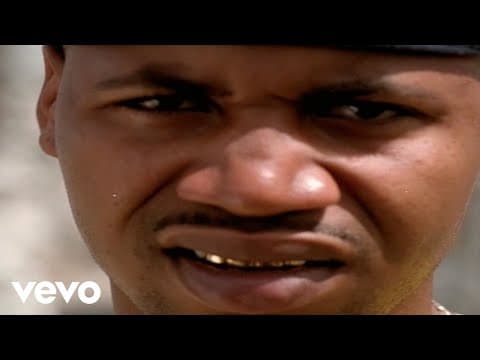
Juvenile - Ha (1998) Director: Marc Klasfeld Era: Late-90s Southern Hip-Hop Emergence (1998) - The pivotal moment Cash Money Records and New Orleans bounce/rap broke into the national mainstream via raw, location-shot documentary aesthetics antithetical to the era's dominant glossy hip-hop video style. Exceptional. "Ha" (1998) occupies a singular position at the intersection of hip-hop history, documentary film aesthetics, and Southern cultural representation. As one of the earliest and most critically acclaimed examples of location-authentic, community-embedded hip-hop video production, it serves as both a primary source for New Orleans street culture in the late 1990s and a formal landmark in music video history. The quantitative profile, 144 scene changes, 1.63s avg shot length, dark/high-contrast palette, is directly legible as aesthetic intentionality, making it an ideal case study for metric-to-meaning analysis in archival research. Context: Released in 1998 as the lead single from 400 Degreez, Juvenile's first major-label release on Cash Money/Universal, "Ha" arrived at a critical juncture when Southern hip-hop was largely invisible to national audiences. Shot entirely in the Magnolia Projects, Juvenile's actual home neighborhood, the video served as an unflinching document of New Orleans poverty and street culture at a time when mainstream hip-hop visuals were dominated by glossy big-budget productions. Its vérité aesthetic and lyrical catalog of project life offered a stark counterpoint to the era's pop-rap spectacle. The song's commercial traction, charting at #68 on the Billboard Hot 100 and #16 on the Hot R&B/Hip-Hop chart, helped establish Cash Money Records' national profile and presaged the full Southern rap mainstream breakthrough of 1999–2001. Director notes: "Ha" is documented as Klasfeld's first major music video commission, described by Juvenile himself as Klasfeld's 'first big video.' Shot over three days in April 1998 on location in the Magnolia Projects, New Orleans, making it among the first music videos ever filmed inside that housing development. The production operated on a low Cash Money Records budget, forgoing sets or special effects in favor of raw documentary footage. Klasfeld employed a vérité, photojournalistic approach with handheld camera work, dolly moves on performance segments, and observational cutaways of neighborhood residents and daily life. Klasfeld later described the conditions on set as a 'third world reality,' noting the absence of glamour or fantasy. The rapid intercutting style and black-and-white timestamp intertitles were distinctive editorial choices that prefigured the video's later critical canonization as a landmark of documentary-inflected hip-hop visual storytelling.
Source: radarchive.org
Part of RAD Archive · Watch in the documentary