Spain stages a shared-body illusion
MAY 15 2015 · 12:10
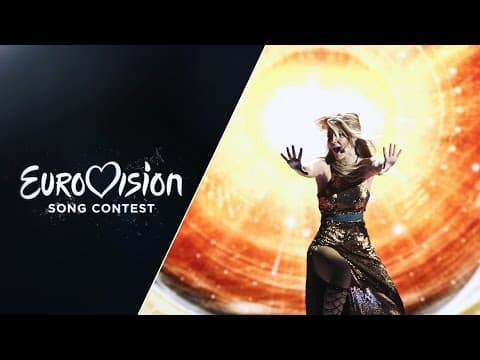
Edurne · "Amanecer" · Spain · 2015 Placement: 21st · Language: Spanish · Composers: Tony Sánchez-Ohlsson, Peter Boström, Thomas G:son · Venue: Wiener Stadthalle · Host: Vienna, Austria · Type: performance innovation · Broadcast: streaming Edurne walked onto the Wiener Stadthalle stage in a gown reportedly constructed to conceal the torso and legs of a male dancer pressed against her back, and the Spanish delegation's central staging idea became visible in the first thirty seconds: a shared-body illusion in which her arms and his arms were choreographed to look like extensions of one figure. Amanecer — 'dawn' — was a sweeping Spanish-language power ballad co-written by Swedish Eurovision specialists Peter Boström and Thomas G:son alongside Spanish producer Tony Sánchez-Ohlsson, a triangulation of Melodifestivalen songwriting craft and RTVE's sensibility. The dancer, Giuseppe di Bella, performed the illusion with trained precision; Edurne, a Madrid-born pop singer who had built a decade-long career in Spanish-language pop and musical theater, delivered the vocal with the theatrical commitment the staging required. The effect — one body with four expressive hands — was striking on camera, exactly the kind of television-first visual idea that modern Eurovision stagecraft had begun to systematize. Spain finished twenty-first in a crowded final with 15 points, a placement that did not reflect the staging's reception; the entry performed better on fan forums and Eurovision press than it did on scoreboards. But the shared-body illusion itself — a specific choreographic device executed to a standard most national delegations would not have attempted — entered the reference vocabulary of Spanish Eurovision stagings, a point the country's subsequent entries returned to when reaching for conceptual staging ideas. Context Edurne was selected internally by RTVE rather than through a public national final, a decision that drew domestic criticism but reflected the broadcaster's preference at the time for established star power. The songwriting team combined Melodifestivalen regulars — Boström and G:son had co-written Euphoria and multiple Spanish entries — with Spanish industry producers, an example of the cross-border Eurovision songwriting pipeline typical of the 2010s. The shared-body illusion was reportedly choreographed by the Spanish delegation's staging team in coordination with the song's dramatic arc. Legacy Amanecer is cited in Spanish Eurovision retrospectives as the staging peak of RTVE's 2010s entries, even though the placement was poor. The shared-body illusion became a frequently referenced example of Spanish staging ambition that predated the country's later Eurovision resurgence under Chanel and Blanca Paloma. The entry also contributed to a longer argument about whether Spain's Eurovision difficulties were songwriting-based rather than staging-based. Mythology Widely remembered for the shared-body illusion rather than the placement. Cited as an early example of television-first Spanish Eurovision stagecraft.
Source: eurovisionoracle.com
Part of Eurovision · Watch in the documentary