Net als toen: The Dutch Chanteuse and the Second Eurovision
MAY 15 1957 · 12:05
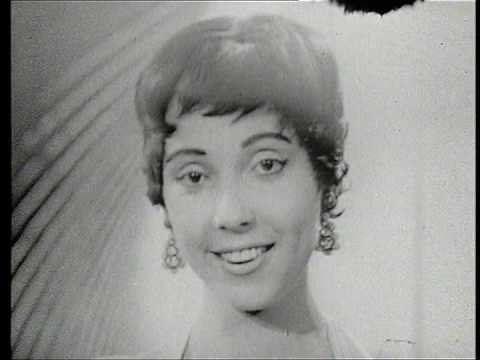
Corry Brokken · "Net als toen" · Netherlands · 1957 Placement: 1st · Language: Dutch · Composers: Guus Jansen, Willy van Hemert · Venue: Grosser Sendesaal des Hessischen Rundfunks · Host: Frankfurt, West Germany · Type: winner · Broadcast: pre color On March 3, 1957, at the Hessischer Rundfunk studios in Frankfurt — a modest broadcast hall in a city still visibly marking its postwar rebuild — Corry Brokken, a 24-year-old Dutch contralto in a dark evening gown, stepped to the microphone to perform 'Net als toen,' a waltzing, almost parlour-song reminiscence of a lover's earlier devotion. She had competed in the inaugural contest in Lugano the year before without placing, and returned as Netherlands' representative for the second edition, which expanded from seven countries to ten. Her delivery was restrained and conversational, anchored by Dolf van der Linden's orchestra — the band that would become a fixture of Dutch Eurovision entries through the 1950s. The scoring system at the time was simple and merciless: each of the ten national juries distributed ten points among the songs, and the totals were read live. Brokken won decisively with 31 points, well clear of the field, giving the Netherlands its first Eurovision victory and the second in the contest's history. The performance was broadcast live via the nascent Eurovision network to a continent in which most television sets were still a neighbourhood event; the image of a Dutch woman at a Frankfurt microphone winning Europe's new cultural prize carried a quiet weight that is now largely lost to the black-and-white kinescope. Context Eurovision in 1957 was barely a contest at all — it was an experiment in the European Broadcasting Union's ability to stitch together a live programme across borders. Only ten nations participated; the United Kingdom and Austria joined that year, Denmark debuted. West Germany hosted because Frankfurt had the technical infrastructure. The continent was twelve years out from the war, the Treaty of Rome establishing the European Economic Community would be signed three weeks later, and television itself was a newly mass medium. Songs were performed with live orchestras in national languages — a rule that would hold, in various forms, for decades. Brokken's win positioned Dutch-language pop, briefly, as a European commercial category. Legacy Brokken would return in 1958, finishing last — Eurovision's first defending champion to do so — and then again as commentator and juror for Dutch broadcasting for decades. 'Net als toen' became a staple of Dutch easy-listening radio and remains one of the canonical early-Eurovision winners, alongside Lys Assia's 1956 'Refrain.' The Netherlands would win again in 1959, 1969, and 1975 before entering a long drought that only broke with Duncan Laurence in 2019. Brokken's victory helped establish the template of the solo female chanson-singer as the contest's default winning archetype through the 1960s. Mythology Brokken is sometimes described as Eurovision's first winner — she was the second, after Lys Assia. The 1957 final is occasionally said to be lost, which is incorrect; the kinescope recording survives and is the earliest Eurovision final still viewable in full. The score of 31 is real but was produced under a juries-of-ten system that bears little resemblance to the 12-points model that came later.
Source: eurovisionoracle.com
Part of Eurovision · Watch in the documentary