The Wealth of Nations
MAR 09 1776 · 12:00
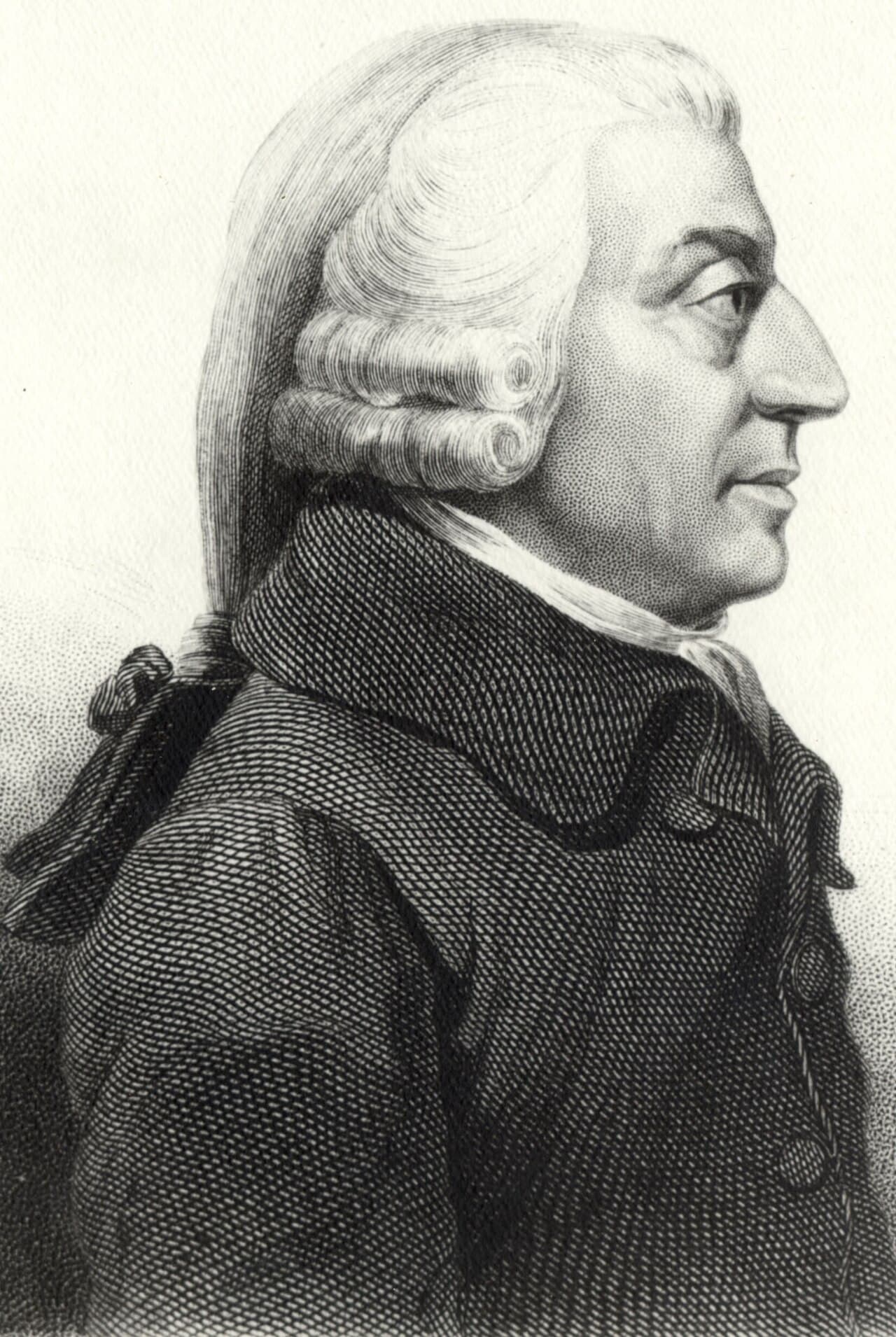
Adam Smith, author of An Inquiry into the Nature and Causes of the Wealth of Nations, 1776. Place: London (W. Strahan and T. Cadell); written largely at Kirkcaldy, Fife Figures: Adam Smith, Glasgow professor of moral philosophy · David Hume, dying that summer, who has read most of it in manuscript An Inquiry into Causes Smith has spent roughly ten years on the manuscript, much of it at his mother's house in Kirkcaldy on the Fife coast. The full title is An Inquiry into the Nature and Causes of the Wealth of Nations. The first edition runs to two quarto volumes and roughly 950 pages. The first printing sells out within six months despite a price (£1.16s.) that buys a labourer two weeks' food. The argument is structured against the prevailing mercantilist orthodoxy, in which wealth is bullion, the bullion stock of a state is increased by maintaining a favourable trade balance, and the favourable trade balance is maintained by tariffs, charters, monopolies, and the close coordination of commerce with the sovereign's foreign policy. Smith argues that wealth is not bullion but the annual produce of labour, that the division of labour increases that produce, that the division of labour is limited by the extent of the market, and that the extent of the market is enlarged by free exchange. The Sovereign Steps Back The implication for the Westphalian sovereign is direct and uncomfortable. The mercantilist sovereign of Colbert's pattern, who charters the East India Company, taxes imported textiles, subsidizes exports, and prosecutes commercial war on his neighbours, is, on Smith's analysis, mistaking sovereign interest for sovereign aggrandizement. Commerce flourishes across borders when sovereigns get out of the way. The book is published exactly four months before the American Declaration of Independence (see [[american-declaration-of-independence-1776]]); Smith uses the colonial question as a long worked example in Book IV. Read alongside Vattel (see [[de-vattel-publishes-1758]]), the post-Westphalian century has now produced its two foundational textbooks: a legal handbook for the sovereign state's external conduct, and an economic case for restricting that conduct in the commercial sphere. The argument over which of these two has the better claim on sovereign attention will animate every subsequent generation. Cobden and Bright will quote Smith against Palmerston; the Bretton Woods architects will quote him against autarky; the WTO will quote him against tariffs; the post-2008 critics wil Video: Dr Craig Smith of Glasgow on Adam Smith and the 1776 Wealth of Nations, given at the Adam Smith tercentenary.
Source: westphalia-oracle.vercel.app