Italian Unification
MAR 17 1861 · 12:00
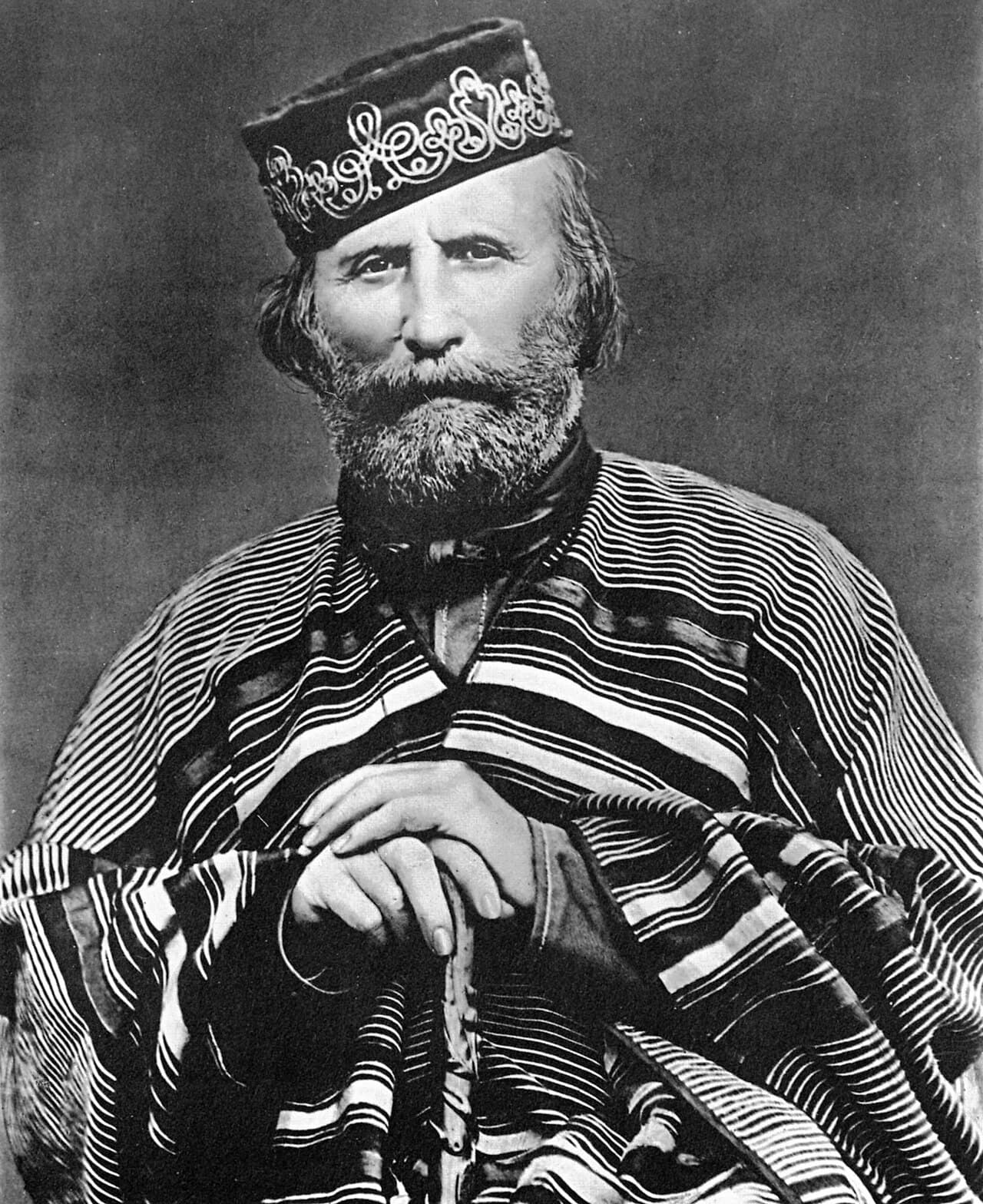
Photographic portrait of Giuseppe Garibaldi (1866). Place: Turin, the first capital of the Kingdom of Italy Figures: Victor Emmanuel II of Savoy, first king · Count Camillo Benso di Cavour, prime minister · Giuseppe Garibaldi, leader of the Thousand · Giuseppe Mazzini, the republican kept on the outside Three Wars and a Sail to Sicily Italy in 1815 is what Metternich called a geographical expression: the Kingdom of Sardinia-Piedmont in the northwest, Lombardy-Venetia under Habsburg rule, the Duchies of Parma, Modena, and Tuscany, the Papal States across the middle, and the Bourbon Kingdom of the Two Sicilies in the south. The Risorgimento works on all of them simultaneously through the 1830s and 1840s. The 1848 risings (see [[revolutions-of-1848]]) fail. Cavour, prime minister of Piedmont from 1852, adopts a method the republicans had not: dynastic war with French help. The Second Italian War of Independence (April-July 1859) is fought by Piedmont and France against Austria. Magenta and Solferino are won at horrific cost; the Red Cross is founded by Henri Dunant in response. Napoleon III pulls France out at Villafranca, but Lombardy passes to Piedmont. The central duchies vote for annexation in early 1860. Garibaldi sails for Sicily in May 1860 with a thousand red-shirted volunteers and conquers the Two Sicilies in six months. Cavour engineers Piedmontese annexation of Garibaldi's gains. The first parliament of a unified Italian state convenes at Turin in February 1861. Italy Made, Italians To Be Made Victor Emmanuel is proclaimed King of Italy on 17 March 1861. Venetia is added after the Austro-Prussian War of 1866. Rome falls to Italian troops on 20 September 1870, after the French garrison is withdrawn for the war with Prussia (see [[german-unification-1871]]); the city becomes the capital the following year. The Papacy retreats behind the Leonine Walls and refuses to recognize the Italian state for the next fifty-eight years. Massimo d'Azeglio's much-quoted line (Fatta l'Italia, bisogna fare gli italiani: Italy is made, now we must make Italians) registers the scale of what remains. A peninsula of 22 million people speaks perhaps two and a half percent Italian as a first language at unification. Literacy is below twenty-five percent; the economic gap between north and south is already wide. The Westphalian principle that one nation deserves one state has produced a state. The nation it presupposes will be constructed by schoolroom and railway over the next two generations, with results that include the Risorgimento's romance, the southern question, and (in due course) Fascism. Video: Kings and Generals on Cavour, Garibaldi, and the diplomatic and military mechanics of the Risorgimento.
Source: westphalia-oracle.vercel.app