Greek Independence
FEB 03 1830 · 12:00
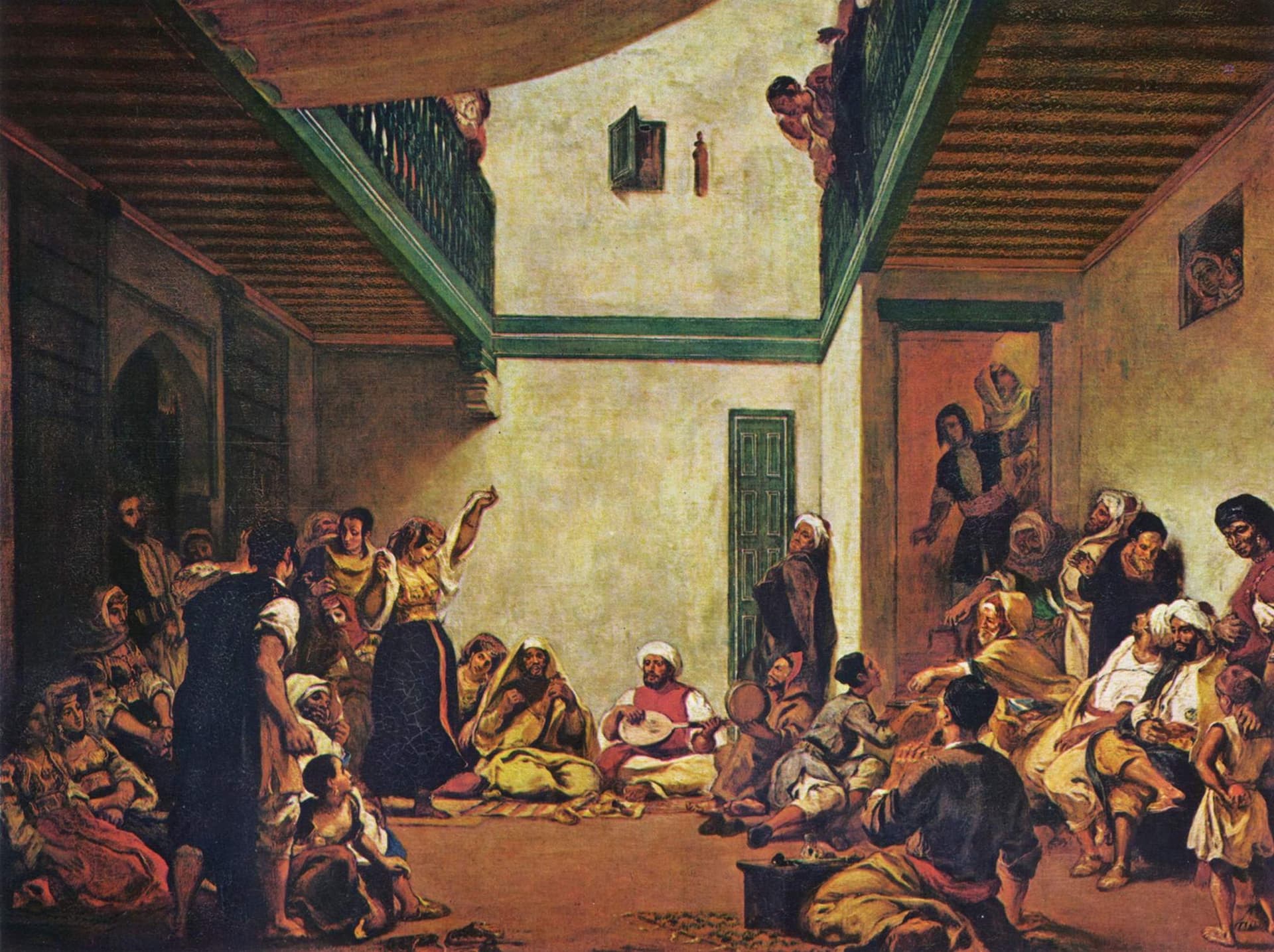
Eugène Delacroix, 'Scenes from the Massacre at Chios' (1824), Salon icon of the Greek cause. Place: London; the protocol negotiated by Britain, France, and Russia Figures: Ioannis Kapodistrias, first head of state of independent Greece · Lord Aberdeen, British Foreign Secretary · Prince Lieven, Russian ambassador · Prince de Polignac, French Foreign Minister Nine Years of War, One Naval Afternoon The Greek War of Independence begins in March 1821 with risings in the Peloponnese. It runs for nine years and consumes perhaps 150,000 lives. Philhellene volunteers from across Europe (Byron at Missolonghi, 1824) lend it a romantic charge that the Holy Alliance powers find difficult to suppress at home. By 1825 the Ottoman position is shored up by Egyptian forces under Ibrahim Pasha, whose campaigns in the Morea reduce much of the Greek countryside to depopulation. On 20 October 1827, a combined British, French, and Russian fleet under Admiral Codrington enters Navarino Bay on a stated mission of mediation and, after a disputed first shot, destroys the Ottoman-Egyptian fleet in four hours. The Duke of Wellington, on hearing the news in London, calls it an untoward event. The Russo-Turkish War of 1828-29 follows. The Treaty of Adrianople in September 1829 forces the Sultan to accept Greek autonomy. The London Protocol of 3 February 1830 converts autonomy into full independence under joint Great Power guarantee. The Pattern That Follows Greek independence is the first nineteenth-century case of a Christian nation seceding from a Muslim empire with Great Power backing. It establishes a template the Concert (see [[congress-of-vienna-1815]]) had not anticipated: collective European intervention not to suppress a revolutionary movement, but to legitimize one, on the ground that the population being claimed has a right to self-determination the existing sovereign cannot or will not honor. The template repeats. Belgium (see [[belgian-independence-1831]]) the next year. The principalities of Wallachia and Moldavia in 1856 and 1859. Serbia, Montenegro, and Romania at the Congress of Berlin in 1878. Bulgaria across the same decades. By the time of the Balkan Wars (see [[balkan-wars-1912]]), the Ottoman position in Europe is reduced to a strip around Constantinople. The Westphalian principle that what happens inside a state is its own business has acquired an exception: not when the population is the wrong religion and the Great Powers can be persuaded to care. Video: Kings and Generals on the eleven-year war and the great-power intervention (Navarino, the London Protocol) that broke Ottoman sovereignty over a province for the first time on nationalist grounds.
Source: westphalia-oracle.vercel.app