The Fukushima Disaster
MAR 11 2011 · 12:00
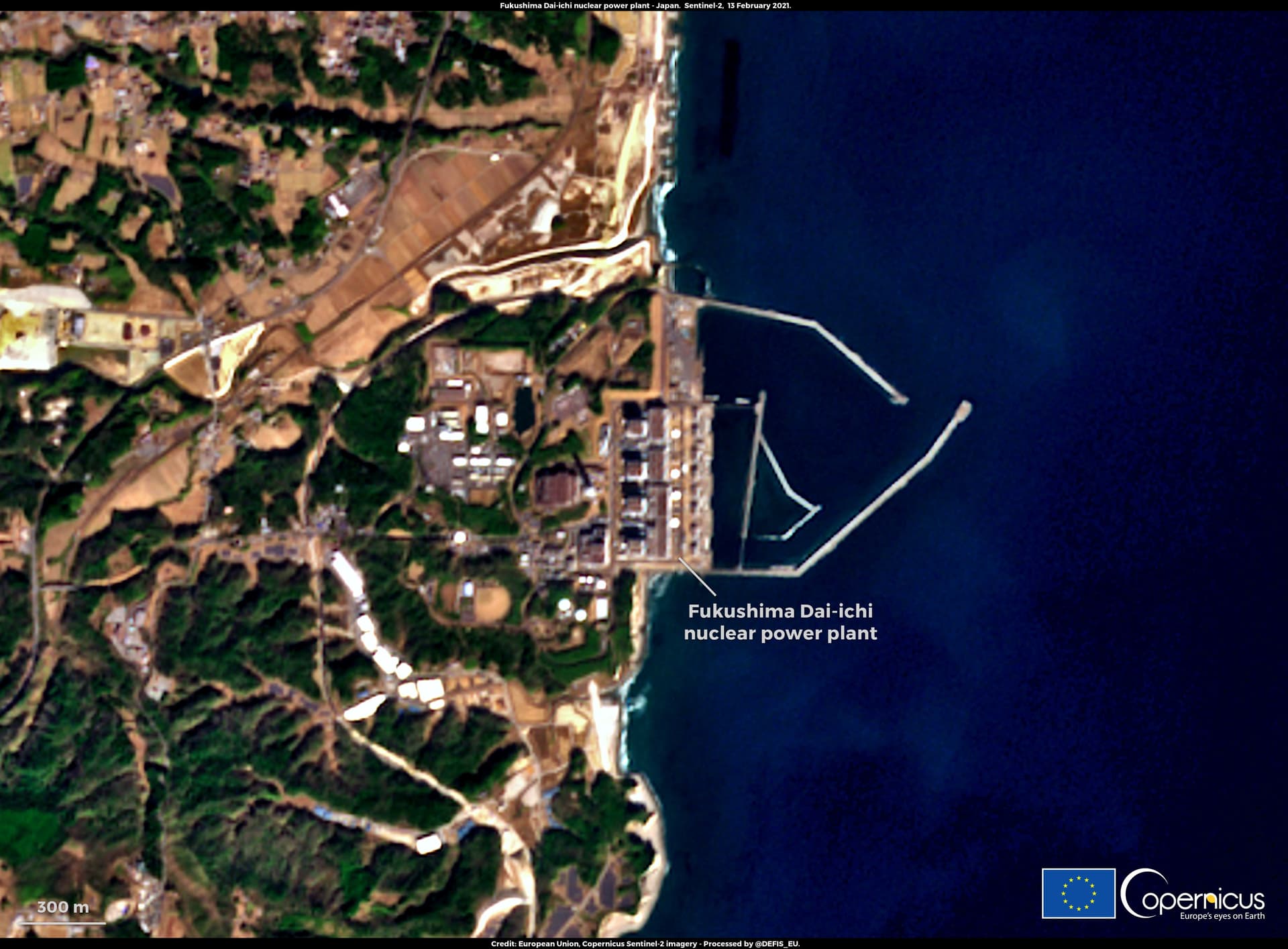
Damaged reactor buildings at the Fukushima Daiichi Nuclear Power Plant in the aftermath of the 11 March 2011 earthquake and tsunami. Place: Fukushima Daiichi Nuclear Power Plant, Ōkuma, Fukushima Prefecture Figures: Naoto Kan, Japanese Prime Minister · Masao Yoshida, plant manager (stayed at his post; died 2013) · TEPCO executives · the unnamed Fukushima 50, plant workers who remained Three Meltdowns At 2:46 p.m. on 11 March 2011, a magnitude 9.1 earthquake strikes off the Tōhoku coast. The plant's reactors scram successfully. Forty-one minutes later the tsunami arrives at heights of up to 14 meters, overtops the 5.7-meter seawall, and floods the emergency diesel generators in the basements. Cooling fails in Units 1, 2, and 3. Over the following four days, three reactor cores melt, hydrogen explosions destroy the secondary containment buildings of Units 1 and 3, and Unit 4's spent-fuel pool comes within hours of dewatering. Masao Yoshida, the plant manager, holds his crew in place through repeated TEPCO orders that the Japanese government later concludes would have abandoned the site to total breach. He authorizes seawater injection against headquarters' explicit instruction. The decision is the difference, in the post-incident analysis, between Fukushima as the third-worst nuclear accident in history and Fukushima as something for which there is no precedent. The Limits of Sovereign Containment The Japanese government cannot adequately disclose: SPEEDI radiation-dispersion data is withheld from the public for weeks. TEPCO cannot adequately contain: contaminated cooling water continues to leak to the Pacific for years. The international response is constrained by sovereign jurisdiction: the IAEA can advise but cannot direct; foreign offers of robotic and remediation assistance are slow to integrate; the 30-kilometre exclusion zone is a Japanese decision affecting downwind populations across several jurisdictions. Germany announces its nuclear phase-out within four months. Switzerland and Belgium follow. The release of treated tritium water into the Pacific, beginning 2023, requires twelve years of diplomacy with neighbors who hold no veto. Sovereignty over nuclear technology meets the limits of what any single state can manage when the failure mode is climatic, trans-jurisdictional, and trans-generational. The relevant time horizon (a thousand years for the spent fuel, a million for the high-level waste) is longer than the Westphalian system itself has existed. Video: BBC News account of the 11 March 2011 earthquake, tsunami, and reactor meltdowns at the Fukushima Daiichi Nuclear Power Plant.
Source: westphalia-oracle.vercel.app