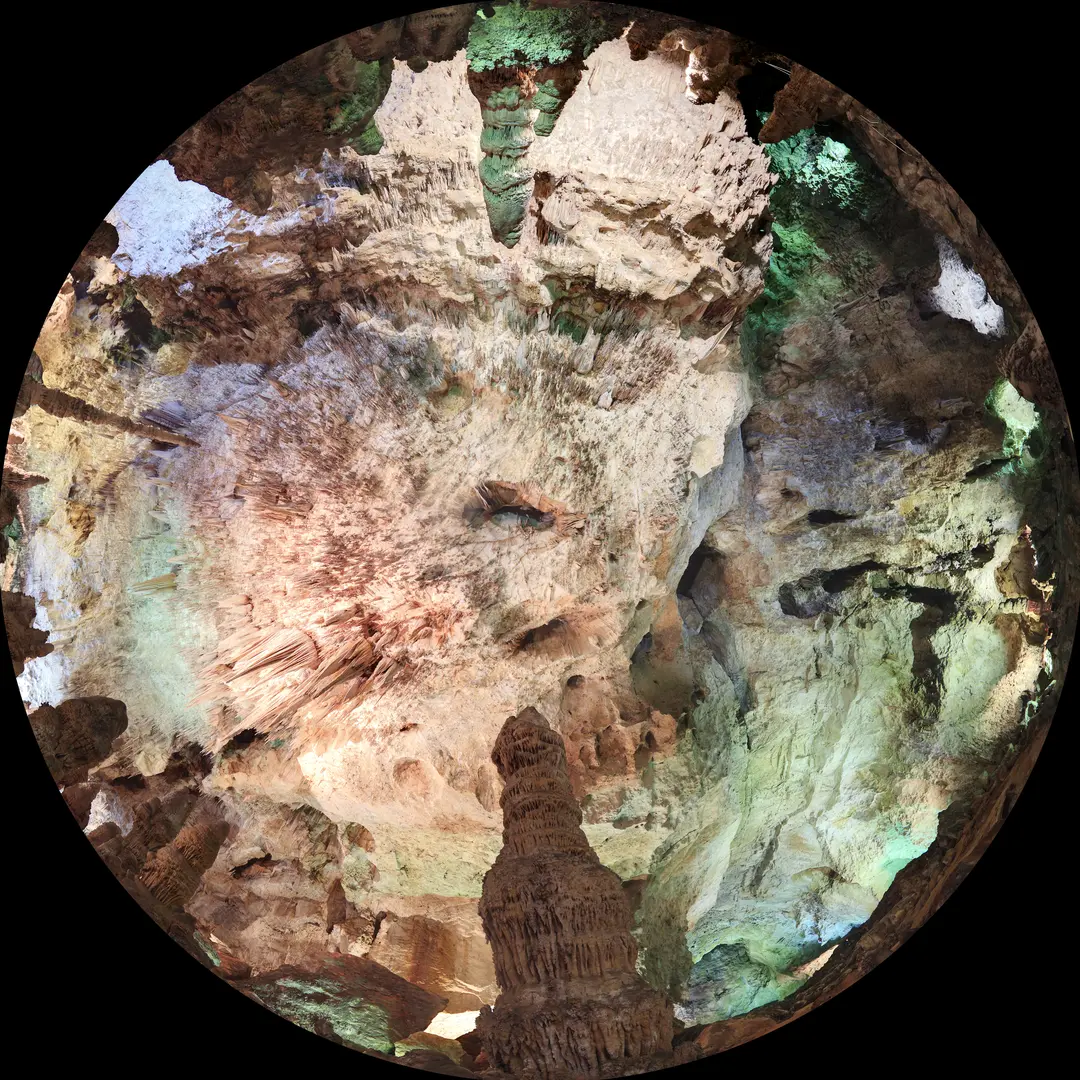
Underground
We live on a thin skin. Beneath it are voids that water spent millions of years dissolving, shafts people sank looking for salt and gold and coal, cities carved out of soft rock by populations hiding from armies, and a biosphere of microbes that may outweigh everything walking around up here. Below all of that is a planet we have never seen and never will, the deepest hole ever drilled reached twelve kilometres and stopped, which is not quite a third of the way through the crust, let alone the six thousand to the centre. Everything we know about the inside of the Earth we learned by listening to earthquakes. The underground is also where the record is kept: it buried Pompeii and preserved it, held Tutankhamun for three thousand years, and kept the oldest art anyone has found on walls that no daylight ever reached. This archive goes down through all of it, the caves, the mines, the digs, the tunnels, the life, the descent, the deep earth, and the underworld people imagined long before they could measure any of it.
A chronological documentary of 647 moments spanning c. 4000 BC–2026 on Loreline.
Curated by Olivier · last updated 2026-09-20
Eras
- Geology, What the ground is made of and how it moves. Plate tectonics and the mantle, the rock cycle, volcanoes and magma chambers, aquifers and groundwater, the deepest boreholes ever drilled, and the instruments that read a planet nobody can see into.
- Earthquakes, The ground failing. Faults and how they rupture, seismology and the seismograph, the big ones from Lisbon to Tōhoku, early-warning systems, building codes and what survives, and the search-and-rescue work in the first seventy-two hours.
- Soil & Worms, The living few metres at the top. Soil horizons and how long they take to form, the worms Darwin spent forty years on, mycorrhizal networks and the fungi that trade with roots, burrowing animals, the seed bank, and the erosion that removes it all faster than it accumulates.
- Caves, The hollow places. Limestone and karst, stalactites and stalagmites, lava tubes and ice caves, crystal chambers, the biggest caverns yet found, and how a cave is surveyed and mapped.
- Caving, Going in. Sport caving and expedition caving, the deep systems of Krubera and Veryovkina, rope work and sumps, cave diving and its fatality rate, the Thai cave rescue of 2018, and the people who keep going back down.
- Cave Life, What lives in permanent darkness. Bats and their colonies, blind fish and cave salamanders, troglobites that lost their eyes and pigment, extremophiles in deep rock, and the microbiology of places sunlight never reaches.
- Cave Art, The oldest pictures. Chauvet, Lascaux, Altamira, El Castillo and the Sulawesi hand stencils, ochre and charcoal and blown pigment, the dating arguments, and the replica caves built because human breath was destroying the originals.
- Archaeology, Digging up what people left. Stratigraphy and the trench, Pompeii and Herculaneum, Çatalhöyük and Sutton Hoo, ground-penetrating radar and LiDAR, radiocarbon dating, and the finds that rewrote a chronology.
- Tombs, Burial as architecture. Tutankhamun and the Valley of the Kings, Qin Shi Huang's terracotta army and the unopened mound, Newgrange and the passage graves, mummies and bog bodies, and the grave goods that tell you what a society valued.
- Catacombs, The cities of the dead beneath cities. Rome's Christian catacombs, the Paris ossuary and its six million, the Capuchin crypts, Odesa and Naples, and the tunnels people later used to hide, smuggle or party in.
- Rock Churches, Buildings cut down into the ground instead of up from it. Lalibela's monolithic churches, Petra, the Cappadocian settlements of Göreme and Derinkuyu, the cliff monasteries of the Judean desert, and the ceilings that were once solid stone.
- Mines, Taking the rock out. Coal and copper and salt, the shaft and the drift, room-and-pillar and longwall, the cage and the headframe, the mining town, the machines that replaced ten thousand men, and the pits that closed.
- Gold Rush, Sudden wealth underground. California in 1849, the Klondike and Witwatersrand, the panning and the claim, boomtowns built and abandoned in a decade, and the artisanal gold miners still going down on ropes today.
- Lithium & Cobalt, The mining the energy transition runs on. Lithium brines and hard-rock spodumene, cobalt in the Congo and the artisanal pits, rare earths and their processing, deep-sea nodules, and the supply chains behind every battery.
- Mining Disasters, When it goes wrong. Firedamp and coal-dust explosions, roof falls and floods, Aberfan and Courrières and Senghenydd, the Chilean thirty-three and their sixty-nine days, mine rescue teams, and the inquiries that followed.
- Tunnels, Boring through. The tunnel boring machine and the roadheader, the Channel Tunnel and the Gotthard Base, metro construction under a live city, sewers and utility tunnels, and the deep repositories being built to hold nuclear waste for a hundred thousand years.
- Secret Tunnels, Underground because it had to be hidden. Escape tunnels under the Berlin Wall, the Cu Chi network, smuggling and cartel tunnels, wartime bunkers and command centres, the Underground Railroad, and the places people went to survive a government.
- Myth, The underworld as an idea. Hades and Sheol and Xibalba, hollow-earth theories and the people who believed them, the journey down and back in myth and literature, and the persistent human conviction that something is under there.
- - Flint in the Form of a Bird. (5000–2950 BCE), Naqada II–III (3650–3000 BCE), dated 4000–3000 BCE. Museum photograph of an excavated object; the date given is the object's, not the photograph's.
- - Seal Amulet in the form of a Lion's Head. 3800–3500 BCE. Museum photograph of an excavated object; the date given is the object's, not the photograph's.
- - Kandila (Collared Jar with Conical Foot). ), Greece, Cycladic, dated 3000–2950 BCE. Museum photograph of an excavated object; the date given is the object's, not the photograph's.
- - Sickle Blade. (2040–1648 BCE), Dynasty 12, dated 1980–1801 BCE. Museum photograph of an excavated object; the date given is the object's, not the photograph's.
- - Sickle Blades. (2040–1648 BCE), Dynasty 12, dated 1980–1801 BCE. Museum photograph of an excavated object; the date given is the object's, not the photograph's.
- - Coffin of Senbi (Lid). ), Egypt, Meir, Middle Kingdom (2040–1648 BCE), Dynasty 12, reign of Amenemhat II (1929–1895 BCE), reign of Senusret III (1878–1839 BCE), dated 1918–1859 BCE. Museum photograph of an excavated object; the date given is the object's, not the photograph's.
- - Fragment of a Necklace. (1540–1069 BCE), Dynasty 18, dated 1540–1296 BCE. Museum photograph of an excavated object; the date given is the object's, not the photograph's.
- - Amulet of Bastet. (1069–715 BCE), dated c. 1069–715 BCE. Museum photograph of an excavated object; the date given is the object's, not the photograph's.
- - Coffin of Bakenmut. (1069–715 BCE), Dynasties 21–22, dated c. 1000–900 BCE. Museum photograph of an excavated object; the date given is the object's, not the photograph's.
- - Shawabty of Pinudjem I, High Priest of Amen and King. (1069–715 BCE), Dynasty 21, dated c. 990–969 BCE. Museum photograph of an excavated object; the date given is the object's, not the photograph's.
- - Coffin of Nesykhonsu. (1069–715 BCE), Dynasties 21–22, dated c. 976–889 BCE. Museum photograph of an excavated object; the date given is the object's, not the photograph's.
- - Amulet of a Crouching Bear. (715–332 BCE), dated 664–332 BCE. Museum photograph of an excavated object; the date given is the object's, not the photograph's.
- - Canopic Jar with Jackal's Head (lid). ), Egypt, Late period (715–332 BCE), Dynasty 26, dated 664–525 BCE. Museum photograph of an excavated object; the date given is the object's, not the photograph's.
- - Canopic Jar with Man's Head (lid). ), Egypt, Late period (715–332 BCE), Dynasty 26, dated 664–525 BCE. Museum photograph of an excavated object; the date given is the object's, not the photograph's.
- - Canopic Jar with Baboon's Head (lid). ), Egypt, Late period (715–332 BCE), Dynasty 26, dated 664–525 BCE. Museum photograph of an excavated object; the date given is the object's, not the photograph's.
- - Black-Gloss Oil Lamp. 400s BCE. Museum photograph of an excavated object; the date given is the object's, not the photograph's.
- - Shawabty of Nectanebo II. (715–332 BCE), Dynasty 30, reign of Nectanebo II (358–340 BCE), dated 360–342 BCE. Museum photograph of an excavated object; the date given is the object's, not the photograph's.
- - Lamp. 100–1 BCE. Museum photograph of an excavated object; the date given is the object's, not the photograph's.
- - Oil Lamp. (c. 50 BCE, 50 CE), dated c. 50 BCE, 50 CE. Museum photograph of an excavated object; the date given is the object's, not the photograph's.
- - Cartonnage Mummy Case. (332 BCE, 395 CE), Ptolemaic dynasty (305–30 BCE), Roman empire (30 BCE, 395 CE), dated c. 50 BCE, 50 CE. Museum photograph of an excavated object; the date given is the object's, not the photograph's.
- - Funerary Portrait of a Young Girl. 25–37 CE. Museum photograph of an excavated object; the date given is the object's, not the photograph's.
- - Sarcophagus. 100–125 CE. Museum photograph of an excavated object; the date given is the object's, not the photograph's.
- - Funerary Panel of a Man. (Egypt), unknown painter, dated about 138–92 CE. Museum photograph of an excavated object; the date given is the object's, not the photograph's.
- - Funerary Portrait of a Woman. 138–92 CE. Museum photograph of an excavated object; the date given is the object's, not the photograph's.
- - Relief Portrait Head of the Emperor Balbinus. 238 CE. Museum photograph of an excavated object; the date given is the object's, not the photograph's.
- - Axe. 250–900 CE. Museum photograph of an excavated object; the date given is the object's, not the photograph's.
- - Funerary Urn. 350–500 CE. Museum photograph of an excavated object; the date given is the object's, not the photograph's.
- - Eccentric Flint. (250-900), dated 600–900. Museum photograph of an excavated object; the date given is the object's, not the photograph's.
- - Animal-Headed Figure Pendant. 1000-1550, dated c. 1000–1550. Museum photograph of an excavated object; the date given is the object's, not the photograph's.
- - Funerary Mask. 13th-16th century, dated 1200–1500. Museum photograph of an excavated object; the date given is the object's, not the photograph's.
- - Funerary Female Figure. 15th-16th century, dated 1200–1500. Museum photograph of an excavated object; the date given is the object's, not the photograph's.
- - Ancient Egyptian Mummies - Pomet's Drogues. Ancient Egyptian Mummies from Pierre Pomet's Histoire Générale des Drogues (1694) by Pierre Pomet [1658 - 1699] Compleat History of Druggs, a - translated 1737 https://archive.org/details/compleathist. Period photograph.
- - Disposition des os dans les catacombes, 1816, D.16744. Auteur(s): Forbes, James (Londres, 1749 - 1819), dessinateur Date de production: En 1816 Type(s) d'objet(s): Dessin, Arts graphiques Dénomination(s): Dessin Dimensions - Oeuvre: Hauteur: 21.4 cm Larg.
- - Le puits, ou source de l’oubli, aux Catacombes, 1816. D.16748. Auteur(s): Forbes, James (Londres, 1749 - 1819), dessinateur Date de production: En 1816 Type(s) d'objet(s): Dessin, Arts graphiques Dénomination(s): Dessin Dimensions - Oeuvre: Hauteur: 15.4 cm Larg.
- - Paris Catacombes 008. Besucher in den Katakomben von Paris, Zeichnung (Anfang des 19. Jahrhunderts). Period photograph.
- - Pen and Pencil (newspaper), 10 February 1855 page 5. Pen and Pencil, Saturday, 10 February 1855, No. 1, Vol I., page 5 of 16, including illustrations. An illustration from Pen and Pencil (an illustrated Family Newspaper). The Sister of Charity. The Ca. Period photograph.
- - Plate II- Topaz, Garnet, Vesuvian, Idocrase, Chrysolite, Olivine, Pistacite, Epidote, Turq. Figures 1-7. The Topaz. 1. Topaz 2. The same [Topaz] 3. Dark Yellow Topaz 4. Sea-green Topaz or Aquamarine 5. Light Yellow Topaz 6. Dark Yellow Topaz 7. The same [Dark Yellow Topaz] Figures 8-19. The. Period photograph.
- - Plate XII- Sulphur, Honey-Stone, Graphite, Coal, Lignite - - f8bf61b7c988972178384f3d01ded. Figures 1-3. Sulphur. 1. Native Sulphur 2. The same [Native Sulphur] 3. The same [Native Sulphur] Figure 4. Honey-Stone. 4. Honey-Stone or Mellite Figures 5-7. Graphite. 5. Graphite Plumbago 6. Clear. Period photograph.
- - Catacombes - Fontaine de la Samaritaine - estampe - APMartial (Potémont) - btv1b84574460. Sujet: Puits Paris (France) -- Catacombes Paysages -- 19e siècle Collection: [Ancien Paris]; 271 Collection: [Ancien Paris]; 271 Éditeur: [Cadart et Luquet; Potémont] (Paris). Period photograph.
- - Lantern Slide Earthworm -- Larder - John H Crabtree - 118 1934 48. This photographic slide shows a feature in the soil and is entitled ‘Earthworm - larder’. The slide was part of the collection belonging to John Crabtree and is within a set of slides of nature and bi. Period photograph.
- - The Quarterly journal of the Geological Society of London. W. TOPLET OK AREAS OF APPARENT UPHEAVAL. 189 these rocks would he affected by this amount, besides that resulting from the thinning of the higher Secondary rocks themselves. We see, then, that in esti. Period photograph.
- - Vue d'une des parois d'une galerie de l'Ossuaire des Catacombes, 1893, PH10012. Auteur(s): Anonyme, photographe Autre titre: Galerie de l'Ossuaire, Catacombes, 14ème arrondissement, Paris. (Titre factice) Date de production: En 1893 Type(s) d'objet(s): Photographie, Arts graphiqu.
- - George Carnac, miner. Title: George Carnac, miner Abstract/medium: 1 photographic print. Period photograph.
- - A power drill at the Echo Mining Company mine, Mojave Mining District, ca.1900 (CHS. A power drill at the Echo Mining Company mine, Mojave Mining District, ca.1900 Photograph of a power drill in operation at the Echo Mining Company mine, Mojave Mining District. Dust is generated at ri. Period photograph.
- - E.M. Hamilton, discoverer of Willow Springs Mine near Rosamond, Antelope Valley, at the mi. 1900 Photograph of miner E.M. Hamilton, discoverer of Willow Springs Mine near Rosamond, Antelope Valle. Period photograph.
- - Group of prospectors on the Colorado River in Glen Canyon up from Lee's Ferry, Grand Canyo. 1900 Photograph of a group of five prospectors on the Colorado River in Glen Canyon up from Lee's Ferry. Period photograph.
- - Interior view of mine and miners in the Mohawk Mine, Goldfield, Nevada, ca.1900. 1905 Photograph of the interior view of mine, miners and $80,000 to the ton in gold sitting on the ledge in the Mohawk M. Period photograph.
- - Mass portrait, Congo, ca. 1900. 1915 Black and white lantern slide showing a portrait of many men, women and children posed what may be a hill up to a mine-shaft in colonial Belgian Congo (present day. Period photograph.
- - Derby Mine, Mill & Camp, Thumb Butte Prescott. Millsite and Camp, Derby Mine, Prescott Arizona -Thumb Butte Mining District, George U. Young. Period photograph.
- - Derby Mine George Young Highland Pines Prescott. Miners in Thumb Butte Mining District, George U. Young of Derby Mines, Prescott, Yavapai County, Arizona Territory. Period photograph.
…and 597 more moments.
Full text archive: /loreline-text/underground.md