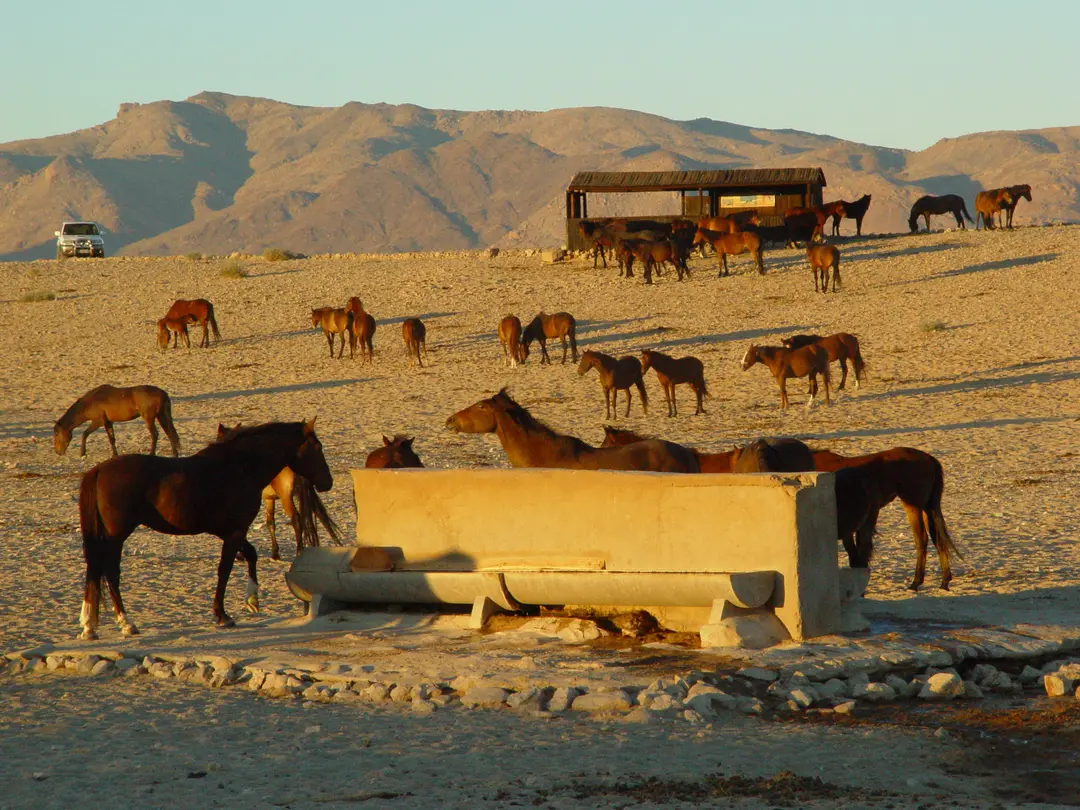
Wild Horses
Horses evolved in North America, crossed into Asia, and then vanished from the continent that made them for about ten thousand years, until Spanish ships brought them back. Everywhere they got loose they became something nobody had a word for: not wildlife, not livestock, not quite wild. Twelve countries have since answered that question twelve different ways. Australia calls them an invasive pest and shoots them from helicopters. Japan protects one herd as a Natural Monument. Canada invented the word "naturalized" and lets a North Atlantic sandbar population live and die untouched. Britain calls them private property with owners and ancient commons rights. The United States protected them in 1971 as "living symbols of the historic and pioneer spirit", a statute that answers a cultural question and carefully avoids the biological one, and now keeps 58,000 of them in corrals and leased pastures at two thirds of the programme budget. The classification was never settled by science. It was chosen, and then the science was recruited. This archive follows the horses and the argument: the Pleistocene bones, the Plains nations who built a civilisation on them in a century, the mustangers and the pet-food trade, Wild Horse Annie and the schoolchildren, the helicopters over Kosciuszko and Nevada, and the people on every side who think they are the ones protecting them.
A chronological documentary of 1,328 moments spanning 1540–2026 on Loreline.
Curated by Olivier · last updated 2026-09-20
- - Frederic Remington - Coronado's March 1540. Coronado's march - Colorado, by Frederic Remington published. Spanish Francisco Vázquez de Coronado Expedition (1540 - 1542), passing through Colonial New Mexico, to the Great Plains.
- - Frederic Remington - Coronado sets out to the north. "Coronado sets out to the north" , oil painting by Frederic Remington . Spanish Francisco Vázquez de Coronado Expedition (1540 - 1542), passing through Colonial New Mexico , to the Great Plains.
- - Frederic Remington - Coronado's March. Coronado's march - Colorado, by Frederic Remington published in Drawings of 1898. Spanish Francisco Vázquez de Coronado Expedition (1540 - 1542), passing through Colonial New Mexico, to the Great Plains.
- - "Coronado sets out to the north" , oil painting by Frederic Remington. (1540 - 1542), passing through Colonial New Mexico , to the Great Plains.
- - Boleando Baguales según Paucke. 1752 Extraída de la publicación "Monumenta Iconographica" publicada en 1964 por Bonifacio del.
- - Illustration by Jean Bernard, digitally enhanced by rawpixel-com. Standing mottled horse by Jean Bernard (1775-1883). Original from the Rijks Museum. Digitally enhanced by rawpixel.
- - Comanches capturing wild horses with lassos, approximately July 16, 1834
- - Colonel Henry Dodge first meets a Comanche emissary, July 14, 1834
- - A Blackfoot indian on horseback 0019v. A Blackfoot indian on. Published by the Library of Congress.
- - Blackfoot warrior riding a fine gray horse. Blackfoot warrior riding a fine gray. Published by the Library of Congress.
- - Gauchos and feral horses by Rugendas. Argentine Gauchos and feral horses, 1846.
- - 1850 Schwarzfussindiander Elchleder anagoria. Piikuni (Blackfeet) elk-skin robe with painted decoration by Mountain Chief, mid-1800s; Museum of the native American, New York, N.Y.,.
- - A Taint on the Wind. Frederic Remington (1861-1909), A Taint on the Wind, 1906, Oil on canvas, Sid Richardson Museum, Fort Worth, Texas ( https://www.sidrichardsonmuseum.org.
- - Kherson tarpan. Tarpan at the Moscow zoo. This male tarpan was then 18 years old, dark grey with white spot on front left tibia. Mane was very long; the tail was cut by keepers. The tarpan was caught in 1866 on Zagradovsk steppe and lived until 1880 in Novovorontsovka, until it reached Moscow zoo on May 29th 1884.
- - StateLibQld 2 393817 Hunting wild horses on the Bunya Mountains, 1866. Hunting wild horses on the Bunya Mountains, 1866 David Parry-Okeden, manager of Burrandowan in the early 1860s, has recorded how the Aborigines helped to build stock yards on Mt. Mowbullan to catch the wild horses, where the brumby mobs were completely out of. Brumby numbers in the Australian Alps are contested between park agencies and heritage advocates.
- - NEPE Saddle Woman. Woman’s Saddle c 1870-1880s Horses were reintroduced to North America by the Spaniards. Many of the horse accoutrements, such as this saddle, reflect the Spanish roots of the horse. The two high projections at the front and back of the saddle are reminiscent.
- - Ledger art of Running Antelope (Hunkpapa Lakota). 1 of. Ledger art of Lakota chief Running Antelope. Painted in 1873 with water colors to Dr. W. J. Hoffmann in a drawing book. The drawing shows Running Antelope on his horse when he kills one Arikara and hits another with his lance. The year is given as 1853, and. Published by the Smithsonian Institution.
- - Ledger art of Running Antelope (Hunkpapa Lakota). 2 of. Ledger art of Lakota chief Running Antelope. Painted in 1873 with water colors to Dr. W. J. Hoffmann in a drawing book. The drawing shows Running Antelope on his horse when he kills one Arikara warrior according to the text. This is not clearly shown in the. Published by the Smithsonian Institution.
- - Ledger art of Running Antelope (Hunkpapa Lakota). 3 of. Ledger art of Lakota chief Running Antelope. Painted in 1873 with water colors to Dr. W. J. Hoffmann in a drawing book. The drawing shows Running Antelope on his horse when he kills two Arikara warriors according to the text. This is not clearly shown in the. Published by the Smithsonian Institution.
- - Choker and Bracelet In the Pacific Northwest, dentalia shells were only available from the
- - Lakota casualites. Red Horse drawing of Sioux casualites at Battle of Little Bighorn.
- - NCWHM - Nez Perce Horse Mask. National Cowboy & Western Heritage Museum ( Oklahoma City ). Nez Perce horse mask ( ca. 1880 ), made of red and blue wool stroud cloth, green cloth, sequins and glass beads. CatNo. 1983.06.23.
- - A ledger drawing by Lakota Sioux Chief Black Hawk , depicting a horned Thunder Being ( Haokah. ) on a horse-like creature with eagle talons and buffalo horns. The creature's tail forms a rainbow that represents the entrance to the Spirit World, and the dots.
- - Red Horse pictographic account of the Battle of the Little Bighorn, 1881. 8100. Creator: Red Horse. Title: Red Horse pictographic account of the Battle of the Little Bighorn, 1881. Contained in: Numbered manuscripts 1850s-1980s (some earlier) See Others in: Red Horse pictographic account of the Battle of the Little Bighorn, 1881.
- - Horse and Rider (Henderson Ledger Artist A). Arapaho; Drawing;.
- - Indian Counting Coup MET page9. Cheyenne or Arapaho; Drawing;.
- - Indian Counting Coup MET page9detail2. Cheyenne or Arapaho; Drawing;.
- - Indian Counting Coup MET page9detail3. Cheyenne or Arapaho; Drawing;.
- - Indian, Gun, and Horse MET page3. Cheyenne or Arapaho; Drawing;.
- - Indian, Gun, and Horse MET page3detail1. Cheyenne or Arapaho; Drawing;.
- - Charles Marion Russell - The Piegans preparing to Steal Horses from the Crows
- - A Texas Pony by Frederic Remington 1889
- - The Sentinel (Remington). ).
- - Carrera de caballos indios llegando a la meta, de Remington. Retrato de Federico Madrazo, en la revista española La Ilustración Artística.
- - Frederic Remington Dismounted Moving Led Horses
- - Krieger zu Pferde - Bild von Amos Bad Heart Bull. Paradierende Krieger auf Pferden, gezeichnet und gemalt von dem Oglala-Lakota-Sioux Amos Bad Heart Bull (Tatanka Chante Shicha) nach 1890. (Von diesem Künstler sind 407 Bilder über die Geschichte seines Volkes bekannt, die er mit Tinte, Bleistift und.
- - Schlacht am Little Bighorn - Kampfszene mit Crazy Horse dargestellt von Amos Bad Heart Bull. Darstellung einer Kampfszene mit Crazy Horse in der Schlacht am Little Bighorn, gezeichnet von dem Oglala-Lakota-Sioux Amos Bad Heart Bull (Tatanka Chante Shicha) nach 1890. (Von diesem Künstler sind 407 Bilder über die Geschichte seines Volkes bekannt, die.
- - General George Crook on the Trail. Engraving of General George Crook on horse patrol in Indian country circa 1867; published in The Century Magazine in March 1891.
- - Ako, a Comanche warrior and horse. A Comanche warrior named "Ako" and his horse, photographed 1892.
- - Lakota Dead at Battle of Little Bighorn. Lakota Dead at the Battle of Little Bighorn Red Horse.
- - Attack on horseback (Gokliz sketch). "Man on rearing horse attacks standing man with spear. Man on foot also armed with spear." "Unsigned ink drawings, colored with brightly-hued watercolors, of Apache Indians. The drawings were most likely made by Gokliz at Fort Sill,.
- - Two men with shields on rearing horses (Gokliz sketch). Two Apache men on horses as the horses rear up on their hind legs.
- - White horse with accoutrements (Gokliz sketch). White horse owned by the Apache people, with a saddle and blankets.
- - Woman on black horse greets man (Gokliz sketch). "Apache woman on horse in brightly colored dress, long hair, and silver belt. Man stands to the side in scalp shirt and yellow moccasins. He holds a spear." "Unsigned ink drawings, colored with brightly-hued watercolors, of Apache Indians. The drawings were.
- - Man Greets Woman on Horse (Gokliz sketch). Drawing of a man greeting a woman on.
- - Two men on horses with spears and blankets (Gokliz sketch). Two Apache men on horseback.
- - On the Head-Waters--Burgess Finding a Ford by Frederic Remington. On the Head-Waters--Burgess Finding a Ford. Medium: Watercolor on paper. Dimensions: 20 1/2 x 30 1/2 in. (52.1 x 77.5 cm) In summer 1893 Remington visited Yellowstone, America’s first national park, to research an article on its soldiers for Harper’s Weekly..
- - Remington A cracker cowboy. Remington, Frederic, 1861-1909. Publication info: New York : Harper & Brothers , 1895. Physical descrip: 1 photoprint : b&w ; 10 x 8 in. Series Title: (Reference collection) General Note: Included in an article entitled, "Cracker Cowboys of Florida" published.
- - Nez Perce Indians with Appaloosa horse, around 1895. Nez Perce Indians with Appaloosa horse, around.
- - Cuba in war time by Richard Harding Davis; illustrated by Frederic Remington LCCN2015646535. Title: Cuba in war time by Richard Harding Davis; illustrated by Frederic Remington Abstract/medium: 1 print : color ; sheet 27 x 39 cm (poster. Published by the Library of Congress.
…and 1,278 more moments.
Full text archive: /loreline-text/wild-horses.md