Poland
A thousand years of Poland — Piast kings, the Polish-Lithuanian Commonwealth, the three Partitions that erased Poland from the map, WWI rebirth, WWII catastrophe, Solidarność, the EU. From Mieszko I's baptism (966) to the modern Third Republic.
A chronological documentary of 99 moments spanning 966–2025 on Loreline.
last updated 2026-07-16
Eras
- Piast Dynasty (966-1370) — Mieszko I baptises Poland in 966. The Piast dynasty unifies the Slavic tribes, accepts Latin Christianity, and builds the first Polish kingdom. Crown moves to Kraków; Casimir the Great codifies the law.
- Jagiellonian Era (1386-1572) — Jadwiga marries Jogaila of Lithuania (1386); the Polish-Lithuanian dual state is born. Crushing victory over the Teutonic Knights at Grunwald (1410). Copernicus, Nicholas of Cusa, Polish Golden Age.
- Commonwealth (1569-1772) — Union of Lublin formalises the Polish-Lithuanian Commonwealth — Europe's largest, most religiously tolerant state. Elective monarchy, golden liberty, Vasa kings, the Deluge with Sweden, John III Sobieski rescues Vienna from the Ottomans (1683).
- Partitions (1772-1918) — Three Partitions (1772, 1793, 1795) erase Poland from the map for 123 years. Russian, Prussian, Austrian rule. Chopin in exile, Mickiewicz writing the national epic, Kościuszko's uprisings, Piłsudski plotting in Galicia.
- Second Republic (1918-1939) — November 11, 1918 — Poland independent again. Piłsudski as Chief of State. Polish-Soviet War, "Miracle on the Vistula" (1920). 21 years of independence before September 1939.
- WWII & PRL (1939-1989) — September 1, 1939: Germany invades. The Holocaust; Auschwitz; the Warsaw Uprising. 6 million Poles dead — 1 in 6 of the prewar population. Postwar communism, Stalinist terror, Wojtyła elected pope 1978, Solidarność 1980.
- Third Republic (1989-) — June 4, 1989 — first partially-free elections; communism falls. Round Table Talks. EU accession 2004. Tusk vs Kaczyński. The Smolensk crash 2010. PiS years. Tusk's comeback 2023.
- — Baptism of Poland. April 14, 966. Mieszko I, first ruler of the Polans, accepts Latin Christianity — likely in Regensburg under Bohemian wife Dobrawa. The founding event of the Polish state; modern Poland still celebrates April 14 as Baptism of Poland Day.
- — Congress of Gniezno. March 1000. Holy Roman Emperor Otto III makes pilgrimage to Gniezno to venerate the relics of Saint Adalbert (Wojciech). Recognises Bolesław as quasi-equal; establishes the Archbishopric of Gniezno. The diplomatic moment that integrated Poland into Latin Christendom.
- — Gniezno Cathedral. The first metropolitan cathedral of Poland. Site of the coronation of the first Polish kings. The bronze "Doors of Gniezno" (c. 1175) depict the martyrdom of St Adalbert — one of medieval Europe's great Romanesque artworks.
- — Bolesław I the Brave. 992-1025. First King of Poland (crowned April 18, 1025, days before his death). Conquered Kievan Rus to the east, defeated Henry II of Germany. Established Gniezno as the first archdiocese (1000) — the Congress of Gniezno effectively recognised Poland as an independent kingdom.
- — Kraków Becomes Capital. c. 1040. Casimir the Restorer moves the royal seat from Gniezno to Kraków on the Wisła River. Kraków remains the capital for 556 years (until 1596).
- — Martyrdom of St Stanislaus. April 11, 1079. Bishop Stanislaus of Kraków killed by King Bolesław II during Mass — the most consequential church-state conflict of medieval Poland. Stanislaus canonised 1253; patron saint of Poland.
- — Wawel Cathedral. The Cathedral on Wawel Hill, Kraków — coronation site of 38 Polish kings, burial site of national heroes (Kościuszko, Mickiewicz, Piłsudski). The most sacred building in Polish national mythology.
- — Mongol Invasion of Poland. April 9, 1241. Polish forces under Henry the Pious crushed at the Battle of Legnica by the Mongol army of Baidar and Kadan. Henry killed; his head paraded on a spear. The Mongols withdraw to Hungary; Poland enters a feudal-fragmentation period.
- — Kraków Receives Magdeburg Rights. June 5, 1257. Bolesław V the Chaste grants Kraków the Magdeburg charter — German urban law that established the city's self-governance, market layout, and merchant rights. The Main Market Square (Rynek Główny) dates from this grant.
- — Statute of Kalisz. September 8, 1264. Bolesław the Pious grants Jews extensive legal protections — among the most comprehensive in medieval Europe. Extended by Casimir the Great in 1334. Polish lands become Europe's largest Jewish refuge for the next 600 years.
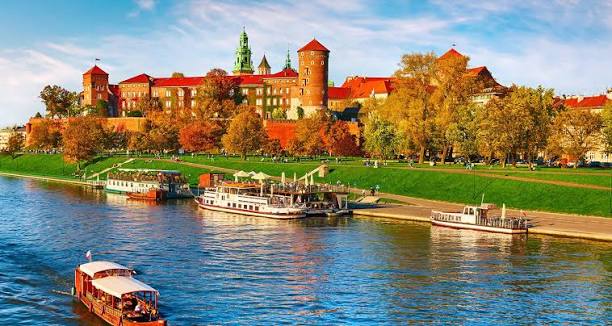
- — Wawel Royal Castle. Built atop Wawel Hill in Kraków by successive Polish kings. The seat of the Polish crown from the 11th to the 17th century. UNESCO World Heritage Site.
- — Władysław I the Elbow-High. 1320 coronation. Reunified the fragmented Polish lands after 188 years of feudal division. The crowning of Władysław Łokietek as king restored the Polish kingdom; his son Casimir III would build it into a major European power.
- — Casimir the Great. 1333-1370. The only Polish king called "Great." "Found Poland built of wood, left it built of stone." Codified the Statutes of Wiślica + Piotrków, founded Kraków University (1364), invited Jews fleeing persecution from the Rhineland. Doubled the size of Poland.
- — Jagiellonian University Founded. May 12, 1364. Casimir the Great founds Kraków Academy. After Charles University in Prague (1348), the second-oldest university in Central Europe. Renamed Jagiellonian University 1817. Among its later students: Nicolaus Copernicus and Karol Wojtyła (Pope John Paul II).
- — Jadwiga Crowned King of Poland. October 16, 1384. Eleven-year-old Jadwiga of Anjou crowned as "Rex Poloniae" — Latin for "King," not Queen (Poland had no provision for a female sovereign). Two years later she marries Jogaila of Lithuania, beginning the Jagiellonian dynasty.
- — Union of Krewo. August 14, 1385. Jogaila of Lithuania (pagan grand duke) agrees to convert to Catholicism, marry Jadwiga, and unite Lithuania with Poland in exchange for the Polish crown. The Personal Union that lasted four centuries.
- — Jogaila Baptised as Władysław II. February 15, 1386. Jogaila baptised at Wawel and crowned king on March 4. Founder of the Jagiellonian dynasty; ruled Poland 1386-1434. Lithuania becomes the last European nation to officially convert to Christianity.
- — Battle of Grunwald. July 15, 1410. One of the largest medieval battles in Europe. Polish-Lithuanian army under Władysław II Jagiełło crushes the Teutonic Knights; Grand Master Ulrich von Jungingen killed. Ends Teutonic dominance in the Baltic; the founding national-military memory.
- — Birth of Copernicus. February 19, 1473, Toruń. Mikołaj Kopernik. Canon of Frombork Cathedral. His "De revolutionibus orbium coelestium" (1543) places the Sun at the centre of the universe — the scientific revolution's founding text.
- — Veit Stoss Altar in Kraków. 1477-1489. Veit Stoss (Wit Stwosz) completes the linden-wood altarpiece of St Mary's Basilica, Kraków — Europe's largest Gothic altarpiece. 13m tall; one of the masterworks of late-medieval European sculpture.
- — Sigismund I the Old. 1506-1548. The Renaissance reaches Poland. Sigismund I brings Italian artists to Wawel; his marriage to Bona Sforza (1518) imports Italian cuisine, fashion, and humanist culture. Polish Golden Age begins.
- — Bona Sforza in Poland. April 1518. Bona Sforza marries Sigismund I; brings Italian Renaissance to Kraków. Introduced new vegetables to Poland (tomatoes, cauliflower, leeks — still called "włoszczyzna" / "Italian things" in modern Polish).
- — Zygmunt Bell Cast. 1521. The Zygmunt Bell — 13 tonnes, cast for King Sigismund I — rung only on major national occasions. The aural soul of Wawel Cathedral; rings on every major Polish national event for 500 years.
- — Prussian Homage. April 10, 1525, Kraków. Albrecht von Hohenzollern, last Grand Master of the Teutonic Order, kneels before Sigismund I in the Kraków Main Square. The Teutonic State becomes the secular Duchy of Prussia under Polish suzerainty. The "Prussian Homage" painting by Jan Matejko is in the Sukiennice.
- — De Revolutionibus Published. 1543. Copernicus publishes "On the Revolutions of the Heavenly Spheres" — heliocentric model of the solar system. Copy delivered to him on his deathbed, May 24, 1543. The book that began the Scientific Revolution.
- — Union of Lublin. July 1, 1569. Personal union of Poland and Lithuania converted into a real union — the Polish-Lithuanian Commonwealth (Rzeczpospolita Obojga Narodów). Europe's largest state by area; the Sejm becomes the most representative parliament of any 16th-century European polity.
- — First Royal Election. April 4-11, 1573. The first royal free election of the Polish-Lithuanian Commonwealth. ~50,000 nobles vote on horseback at Kamień, near Warsaw. Henry of Valois elected; flees back to France 4 months later.
- — Warsaw Confederation. January 28, 1573. The Polish nobility pledges mutual religious toleration. The Warsaw Confederation became the legal foundation of the Commonwealth's religious tolerance; on UNESCO's Memory of the World register.
- — Henrician Articles. May 12, 1573. The Henrician Articles — the constitutional contract every elected Polish king swore to uphold. Set forth religious tolerance, parliamentary supremacy, right of revolt. The most progressive 16th-century European constitution.
- — Stephen Báthory. 1576-1586. Transylvanian prince elected King of Poland. Reformed the army; defeated Ivan the Terrible in the Livonian War. Founded Vilnius University (1579). One of the Commonwealth's most effective elected kings.
- — Sigismund III Vasa. 1587-1632. Swedish-Polish king who initiated the disastrous Polish-Swedish wars and lost the Swedish crown in 1599. His son and grandson would suffer the catastrophic Swedish Deluge of the 1650s.
- — Capital Moves to Warsaw. 1596. Sigismund III Vasa moves the royal residence from Kraków to Warsaw, closer to the Polish-Lithuanian centre after the Union of Lublin. Kraków remains the coronation city; Warsaw becomes the political capital.
- — Battle of Kłuszyn. July 4, 1610. Polish Hussars under Stanisław Żółkiewski annihilate a Russian-Swedish army five times their size. Two months later Polish troops occupy Moscow — the only foreign army to hold the Kremlin until 1812.
- — The Swedish Deluge. 1655-1660. Sweden invades Poland; the entire Polish-Lithuanian state collapses in months. ~40% of the population dies through war, famine, plague. The defining catastrophe of pre-partition Polish memory; subject of Henryk Sienkiewicz's "Potop" (1886).
- — Siege of Jasna Góra. November 18 - December 27, 1655. 70 monks + 180 soldiers defend the Pauline monastery at Częstochowa for 40 days against 3,000 Swedes. Reframes the Deluge as a religious-national struggle; the Black Madonna of Częstochowa becomes the spiritual centre of Catholic Poland.
- — John III Sobieski Elected. 1674. Jan III Sobieski elected King of Poland after his victories against the Ottomans. Reputation as Christendom's shield was set before the throne; cemented at Vienna nine years later.
- — Battle of Vienna. September 12, 1683. John III Sobieski leads the largest cavalry charge in history (18,000 horsemen, mostly Polish hussars) down the Kahlenberg into the Ottoman army besieging Vienna. Decisive Habsburg-Polish victory; the high-water mark of Ottoman expansion in Europe.
- — Augustus the Strong Elected. 1697. Augustus II (Elector of Saxony) elected King of Poland after converting to Catholicism. Began the Saxon dynasty period — generally considered the start of Poland's slow descent toward partition.
- — Great Northern War. 1700-1721. Poland devastated as the battleground of the Swedish-Russian Great Northern War, despite formally being neutral. The damage permanently weakens the Commonwealth; sets up the conditions for partition.
- — Stanisław Leszczyński. Twice elected King of Poland (1704, 1733). Lost both times to Saxon-Russian intervention. His daughter Marie married Louis XV of France; Stanisław spent his final decades as Duke of Lorraine, building Place Stanislas in Nancy.
- — Stanisław August Poniatowski. 1764-1795. Last King of Poland. Lover of Catherine the Great in his youth; she made him king. An Enlightenment patron who tried to reform Poland out of decline; failed against Russian, Prussian, Austrian opposition. Abdicated 1795; died in exile 1798.
- — First Partition of Poland. August 5, 1772. Russia, Prussia, Austria annex 30% of Polish territory + ~37% of population. Justified by Frederick the Great as "communion." The Polish Sejm forced to ratify under military duress.
- — Commission of National Education. October 14, 1773. Established by the Sejm after the First Partition. Europe's first ministry of education. Reformed the education system; nationalised Jesuit assets to fund it.
- — Constitution of May 3. May 3, 1791. Europe's first modern codified constitution (second in the world after the US 1788). Limited the elective monarchy, abolished the liberum veto, opened citizenship to townspeople. Russia invaded the next year to overturn it.
- — Second Partition. January 23, 1793. Russia + Prussia annex another 308,000 km² in response to the May 3 Constitution. The Targowica Confederation — Polish magnates collaborating with Russia — became eternal byword for treason in Polish memory.
- — Kościuszko Uprising. March-November 1794. Tadeusz Kościuszko (American Revolutionary War hero) leads the national uprising against Russian-Prussian occupation. Defeated at Maciejowice (October); Kościuszko captured. Triggered the Third Partition the following year.
- — Third Partition. October 24, 1795. The final partition. Poland ceases to exist as a sovereign state for the next 123 years. Stanisław August abdicates; deported to Russia. The partitioning powers banned the use of "Poland" in official discourse.
- — Polish Legions in Italy. 1797. Polish Legions formed in Italy under Jan Henryk Dąbrowski to fight alongside Napoleon. Their marching song "Mazurek Dąbrowskiego" — "Poland is not yet lost" — became the Polish national anthem in 1927.
- — Duchy of Warsaw. 1807-1815. Napoleon's client state in Polish lands. Brought Code Napoléon, abolished serfdom in legal theory. Disappeared at the Congress of Vienna; replaced by the "Congress Kingdom" under Russian tsars.
- — Frédéric Chopin. 1810-1849. Born in Żelazowa Wola near Warsaw. The greatest pianist-composer of the Romantic era; spent his adult life in Paris exile, composing music that became the international voice of partitioned Poland.
- — November Uprising. November 29, 1830 - October 1831. Polish revolt against Russian rule in the Congress Kingdom. Initial success; ended in Russian victory. Constitution revoked, Sejm dissolved, Polish autonomy ended for decades.
- — The Great Emigration. 1831-1870. ~10,000 Polish intellectuals, soldiers, and aristocrats emigrate to France, Britain, Switzerland after the November Uprising. The cultural diaspora that included Mickiewicz, Chopin, Norwid. Polish literature flourishes in exile.
- — Pan Tadeusz Published. 1834. Adam Mickiewicz publishes "Pan Tadeusz" in Paris — the national epic of Poland. "Lithuania, my country! You are as good health..." The defining literary work of Polish Romanticism.
- — January Uprising. January 22, 1863 - June 1864. Largest of the 19th-century Polish uprisings against Russia. Guerrilla war across former Commonwealth lands. Crushed; thousands executed or exiled to Siberia. Hundreds of thousands of Russian citizens of Polish descent settled in Siberia.
- — Marie Skłodowska-Curie Born. November 7, 1867, Warsaw. Maria Salomea Skłodowska. Discovered polonium (named for Poland) and radium. First woman to win a Nobel Prize; only person to win Nobels in two different sciences (Physics 1903, Chemistry 1911).
- — Piłsudski Joins Socialists. 1892. Józef Piłsudski joins the Polish Socialist Party (PPS). Will spend the next 22 years building paramilitary organisations in Galicia (Austrian Poland) preparing for armed struggle for Polish independence.
- — Sienkiewicz Publishes Quo Vadis. 1896. Henryk Sienkiewicz publishes "Quo Vadis" — historical novel of Nero's Rome. Translated into 50+ languages; helped Sienkiewicz win the 1905 Nobel Prize in Literature — Poland's first Nobel.
- — Polish Independence. November 11, 1918. With Russia in revolution, Austria-Hungary disintegrating, and Germany surrendering on the Western Front — Józef Piłsudski returns from German imprisonment and assumes power in Warsaw. After 123 years, Poland exists again.
- — Polish-Soviet War. 1919-1921. Soviet Russia tries to push the revolution west through Poland to Germany. Polish forces under Piłsudski stop them outside Warsaw.
- — Miracle on the Vistula. August 13-25, 1920. Polish counter-offensive at the Battle of Warsaw repels the Red Army from the suburbs of the Polish capital. ~25,000 Soviet dead, 60,000+ captured. Stopped the Bolshevik westward push; preserved interwar European order for 19 years.
- — Gdynia Built from Scratch. 1922-1939. Poland builds the port city of Gdynia on the Baltic — a substitute for Gdańsk (Danzig) which remained a Free City under League of Nations rule. Symbol of interwar Polish national construction.
- — May Coup. May 12-15, 1926. Piłsudski stages a military coup against the elected government. ~300 dead in three days of street fighting. Begins the Sanation regime — authoritarian government under Piłsudski's personal authority until his death in 1935.
- — Death of Piłsudski. May 12, 1935. Józef Piłsudski dies; Poland mourns. The state-funeral procession from Warsaw to Wawel becomes one of the largest mass-mourning events in 20th-century Polish history.
- — Molotov-Ribbentrop Pact. August 23, 1939. Germany and the USSR sign a non-aggression pact with a secret protocol dividing Eastern Europe into spheres of influence. Sealed Poland's fate; Soviet invasion would follow the German one within 17 days.
- — German Invasion. September 1, 1939, 4:45 AM. Battleship Schleswig-Holstein opens fire on Polish positions at Westerplatte, Gdańsk. Luftwaffe bombs Wieluń. World War II begins. Polish defence collapses in 35 days under Blitzkrieg + Soviet rear-attack.
- — Soviet Invasion. September 17, 1939. USSR invades eastern Poland per the secret Molotov-Ribbentrop protocol. The Polish government flees to Romania. Polish state collapses; territory divided between Nazi Germany and the Soviet Union.
- — Katyn Massacre. April-May 1940. Soviet NKVD murders ~22,000 Polish officers, intelligentsia, and police in the Katyn Forest and other sites. Soviet Union denied responsibility until 1990. The pre-war Polish officer class effectively eliminated.
- — Auschwitz Opens. May 20, 1940. The first concentration-camp inmates arrive at Auschwitz — initially a Polish-political-prisoner camp; expanded into the largest Nazi death camp 1941-42. 1.1 million people killed; ~960,000 of them Jews.
- — Auschwitz Liberated. January 27, 1945. Soviet 60th Army liberates Auschwitz — finds ~7,000 surviving prisoners. Most had been forced on death marches west days earlier. January 27 is now International Holocaust Remembrance Day.
- — Warsaw Ghetto Sealed. November 16, 1940. The Germans seal off the Warsaw Ghetto — at peak, ~460,000 Jews in 3.4 km². The largest Nazi ghetto. ~92,000 die from starvation and disease before deportations to Treblinka begin (July 22, 1942).
- — Warsaw Ghetto Uprising. April 19 - May 16, 1943. The largest Jewish revolt of the Holocaust. ~700 fighters hold off the SS for nearly a month before the ghetto is razed. ~13,000 Jews killed during the uprising; the rest deported to Treblinka.
- — Warsaw Uprising. August 1 - October 2, 1944. Polish Home Army (Armia Krajowa) launches a 63-day uprising against the German occupation. Soviet forces wait across the Vistula. ~200,000 dead; Warsaw razed by Germans in reprisal. The defining Polish wartime trauma.
- — Yalta Conference. February 4-11, 1945. Roosevelt, Churchill, Stalin agree at Yalta that postwar Poland will be under Soviet sphere of influence. The wartime Polish-government-in-exile in London not invited. Sealed 44 years of communist Poland.
- — Polish Borders Shifted West. 1945. Poland's borders shifted ~200km west — gaining Silesia and former East Prussia from Germany, losing Vilnius and Lwów to the USSR. ~15M people displaced. The most consequential single border-shift of the postwar era.
- — Communist Consolidation. 1948. Polish Workers' Party absorbs the Socialists into the new Polish United Workers' Party (PZPR). Stalinist period begins. Will rule Poland for 41 years.
- — Poznań Protests. June 28-30, 1956. Workers at Poznań's Cegielski factory strike for bread and political freedom. ~100,000 demonstrators; security forces kill at least 57. The first major anti-communist uprising in the Eastern Bloc.
- — Polish October. October 1956. Władysław Gomułka returns to power after the Poznań protests. Brief liberalisation: Soviet troop limits, Catholic Church reopened, agricultural collectivisation halted. Most reforms reversed within a few years; Gomułka becomes increasingly conservative.
- — December 1970 Protests. December 14-22, 1970. Workers at Baltic shipyards (Gdańsk, Gdynia, Szczecin) strike against food-price hikes. Military fires on protesters; 45 killed in Gdynia alone. Brought down Gomułka; Edward Gierek became First Secretary.
- — Karol Wojtyła Elected Pope. October 16, 1978. Cardinal Karol Wojtyła of Kraków elected Pope John Paul II — first non-Italian pope in 455 years. Polish Catholic Church suddenly the most important moral force in Soviet-bloc politics.
- — Solidarność Founded. September 17, 1980. Solidarność founded in Gdańsk — first independent trade union in the Soviet bloc. Within a year: 10M members (1/3 of Poland's working-age population). The mass-democratic movement that would topple Polish communism.
- — Martial Law. December 13, 1981. General Jaruzelski declares martial law. Solidarność leaders interned, organisation banned. ~90 deaths. Martial law formally lifts July 1983; informal repression continues until 1989.
- — Lech Wałęsa Wins Nobel Peace Prize. October 5, 1983. Lech Wałęsa awarded the Nobel Peace Prize. His wife Danuta accepts in his place — he fears the communist government won't let him back in.
- — Murder of Father Popiełuszko. October 19, 1984. Father Jerzy Popiełuszko — Solidarność chaplain — murdered by Polish secret police (SB). 800,000 people attend his funeral. The defining martyrdom of the Solidarność era; canonised 2010.
- — Round Table Talks. February 6 - April 4, 1989. Government-Solidarność negotiations at the Round Table. Agreement: partially-free elections + legalisation of Solidarność. The first major negotiated transition out of communism in Europe.
- — June 4, 1989 Election. June 4, 1989. Solidarność wins 99 of 100 Senate seats and every contested Sejm seat. The same day Chinese tanks crushed Tiananmen Square. The single day on which European communism began to die.
- — Mazowiecki Government. August 24, 1989. Tadeusz Mazowiecki becomes Prime Minister — first non-communist head of government in the Soviet bloc since 1948. Begins the "shock therapy" Balcerowicz Plan.
- — Wałęsa Elected President. December 9, 1990. Lech Wałęsa elected first directly-elected President of post-communist Poland. Serves one tumultuous five-year term (1990-1995) before losing to Aleksander Kwaśniewski.
- — Kwaśniewski Defeats Wałęsa. November 19, 1995. Aleksander Kwaśniewski (former communist) defeats Wałęsa in a runoff election. The "post-communist normalisation" of Polish politics; Solidarność weakened by infighting.
- — Poland Joins the EU. May 1, 2004. Poland accedes to the European Union — the largest single enlargement in EU history. 75% of Poles vote yes in the 2003 referendum. 1.5M Poles migrate westward in the first decade.
- — Death of John Paul II. April 2, 2005. John Paul II dies in Rome. ~4 million pilgrims travel to Rome for the funeral — largest funeral attendance in modern history. Poland in nine days of national mourning.
- — Kaczyński Wins Presidency. October 23, 2005. Lech Kaczyński defeats Donald Tusk for the presidency. PiS (Law and Justice) consolidates the conservative right. Kaczyński twin brothers — Lech as President, Jarosław as PM — define mid-decade Polish politics.
- — Tusk's First Term as PM. November 16, 2007. Donald Tusk becomes Prime Minister. PO (Civic Platform) rules until 2015. Pro-European technocratic government; navigated Poland through the 2008 global financial crisis without a recession.
- — Smolensk Air Disaster. April 10, 2010. Polish presidential Tu-154 crashes near Smolensk en route to commemorate the 70th anniversary of the Katyn massacre. President Lech Kaczyński and 95 others killed. The deepest political wound of the post-1989 era.
- — Poland Hosts Euro 2012. June 2012. Poland (with Ukraine) hosts UEFA Euro 2012. National Stadium in Warsaw built; major infrastructure modernisation. Symbolic moment of Poland's "normal European country" arrival.
- — Andrzej Duda Elected President. May 24, 2015. PiS-backed Andrzej Duda defeats incumbent Bronisław Komorowski in the presidential runoff. With PiS's October parliamentary majority, PiS controls all branches of government for the first time.
- — PiS Wins Outright Majority. October 25, 2015. Law and Justice (PiS) wins an absolute parliamentary majority — first since 1989. Begins 8 years of conservative-nationalist rule; reshapes the judiciary, media, abortion law.
- — Belarus Border Crisis. August 2021 - 2022. Belarus dictator Lukashenko channels migrants from the Middle East and Africa to the Polish border. Poland erects a 5.5m steel fence along 186 km of the EU's eastern border. The first major migrant-weaponisation crisis of the 2020s.
- — Tusk Returns as PM. October 15, 2023 election; December 13, 2023 government. Donald Tusk's pro-European coalition wins parliamentary elections; PiS loses power after 8 years. Highest turnout in any Polish democratic election (74.4%).
- — Trzaskowski-Nawrocki Runoff. June 1, 2025. Karol Nawrocki (PiS-backed) defeats Warsaw Mayor Rafał Trzaskowski (Tusk's ally) by 51-49 in the presidential runoff. Sets up cohabitation tensions between Tusk's government and the PiS-aligned presidency.
Full text archive: /loreline-text/poland.md