Gary Barlow - Forever Love
JUL 01 1996 · 12:00
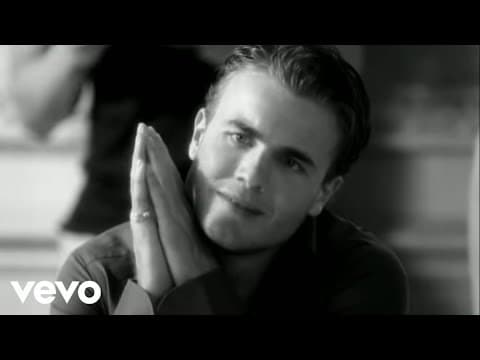
Gary Barlow - Forever Love (1996) Director: Sophie Muller Era: Post-Britpop Adult Contemporary Solo Breakthrough (1996) - Mid-1990s UK chart landscape marked by the dissolution of boy bands and emergence of adult-oriented solo pop balladry; Gary Barlow's debut solo single arriving months after Take That's disbandment, positioned against Britpop's dominance with a classicist, emotionally earnest counterpoint. A high-value archival document capturing the precise cultural pivot point of Gary Barlow's transition from Take That member to credible solo artist, and an exemplary mid-career Sophie Muller work demonstrating her signature black-and-white observational realism. The video's combination of chart-historical significance (first Take That member to score a solo UK #1) and directorial pedigree makes it essential for both 1990s British pop history and music video auteur studies. The fast montage structure over a slow ballad also makes it a technically instructive case study in counterpoint editing. Context: Released on 8 July 1996, 'Forever Love' arrived in the immediate aftermath of Take That's disbandment in February 1996, making it Barlow's first solo statement to a UK public curious whether the group's primary songwriter could command the charts alone. It debuted at UK #1, selling 109,000 copies in its first week, making Barlow the first Take That member to top the charts solo. The single also reached #1 in Spain, Lithuania, and Taiwan, and entered the top five across Belgium, Denmark, Germany, Ireland, and Switzerland, demonstrating the transatlantic and pan-European reach of mid-1990s British adult pop. The video's black-and-white realist aesthetic, directed by Sophie Muller at the height of her mid-90s creative peak, deliberately distances Barlow from the polished, colourful pop-idol presentation of Take That, signalling artistic maturation and emotional seriousness at a culturally pivotal moment in UK pop. Director notes: Directed by Sophie Muller in 1996, confirmed across IMDB (tt9130706), IMVDb, and Wikipedia. The video is shot in black and white to convey maturity and intimacy, contrasting with the more vibrant visual style of Barlow's previous work with Take That. It opens with Barlow waking alone and looking out of a window, follows him through a series of day-to-day activities, and culminates in a downtown café where he observes various forms of human love before returning to his studio. The choice of B&W photography and observational realist style is consistent with Muller's established mid-1990s aesthetic vocabulary, intimate, atmosphere-driven, and focused on emotional truth over spectacle. The fast editing pace (97 scene changes, avg 2.83s shot length) over a slow ballad creates a characteristic Muller tension between visual energy and musical restraint.
Source: radarchive.org
Part of RAD Archive · Watch in the documentary