Electrica Salsa OFF (Original) — Electrica Salsa OFF (Original)
JUL 01 1986 · 12:00
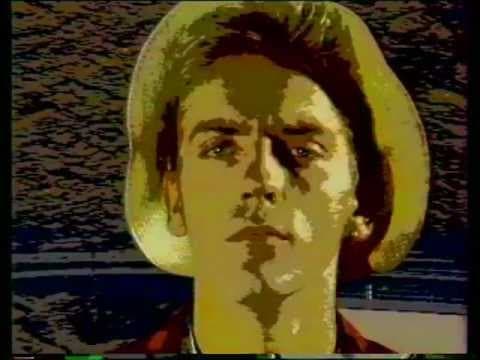
Electrica Salsa OFF (Original) — Electrica Salsa OFF (Original) (1986) Era: Mid-1980s European Electronic Pop (1986–1987) - West German Eurodance/new beat emergence; era of ZYX Records club crossover hits bridging Italo disco and proto-techno, concurrent with the rise of the Frankfurt electronic scene High. As the breakthrough single of OFF — a project that directly seeded both Sven Väth's techno legacy and the Snap! production lineage — this music video is a primary document of the mid-1980s Frankfurt electronic scene. Its early CGI pixelation and bierkeller performance staging are rare surviving examples of West German promotional video production at the crossover moment between Italo disco and new beat. The quantitative data (dark exposure, warm colour temperature, high saturation, fast edit pace) corroborates its period authenticity and positions it as an irreplaceable reference artefact for electronic music historiography. Context: Released in 1986 on ZYX Records out of West Germany, 'Electrica Salsa (Baba Baba)' by OFF — the project of Sven Väth, Michael Münzing, and Luca Anzilotti — was a foundational artefact of the mid-1980s European electronic dance music moment. Väth, then 21 and already a resident DJ at Frankfurt's Dorian Gray club, brought the track to Ibiza's key DJs before its chart run. The song became a pan-European phenomenon: number one in Italy, number two in Austria, number three in Germany and France, and number four on the Pan-Eurochart Hot 100, remaining on that chart for 26 weeks and ranking as the 20th best-selling European single of 1987. Its minimalist electronic percussion, Roland TR-808/TR-505 drum machines, and repetitive tribal vocal hook were explicitly compared by contemporary reviewers to Kraftwerk and Trio. Münzing and Anzilotti later co-founded Snap!, carrying the same Frankfurt production ethos into the 1990s mainstream. The video's dark, sepia-toned aesthetic and early CGI pixelation reflect the era's modest promotional video budgets and nascent computer imaging technology. Director notes: Multiple sources describe the video as featuring performance footage in a bierkeller-style interior setting, intercut with early computer graphics that pixelate and abstract the performers. One source notes an iconic sequence in which the frontman interacts with a robot prop. The video is characterised by reviewers as low-budget and straightforward relative to the song's commercial ambition. No production company, director, or crew credits appear in any indexed source.
Source: radarchive.org
Part of RAD Archive · Watch in the documentary