Billy Idol — To Be A Lover
JUL 01 1986 · 12:00
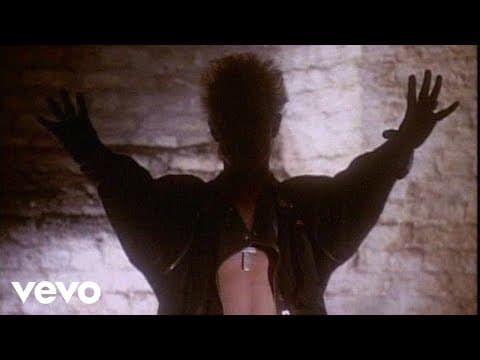
Billy Idol — To Be A Lover (1986) Director: David Mallet Era: Mid-Era MTV Power Pop (1986) - Peak arena-rock video era; glossy stage-performance aesthetic, high-contrast lighting, and multi-camera theatrical production define the Chrysalis Records / Whiplash Smile promotional campaign. High-value archive item representing the convergence of multiple 1986 cultural vectors: peak MTV theatrical performance format, Billy Idol's commercial zenith, David Mallet's prolific directorial output, and the dance-rock/R&B crossover trend. The quantitative fingerprint (2.60s avg shot, 89 scene changes, warm saturation at 120.71) provides a measurable benchmark for mid-decade fast-cut performance videos. Essential for any curriculum covering 1980s music video production, genre hybridisation, or the economics of the MTV promotional era. Context: Released in September 1986, 'To Be a Lover' arrived at the apex of Billy Idol's commercial peak and MTV's dominance as a promotional medium. The video encapsulates the mid-decade convergence of punk attitude, dance-floor energy, and arena-rock spectacle that defined Chrysalis Records' strategy for Idol. The song itself is a cross-cultural artifact: a 1968 deep-soul composition by William Bell and Booker T. Jones, routed through reggae (George Faith / Lee 'Scratch' Perry) before Idol transformed it into an electro-tinged rockabilly-dance hybrid. The video's theatrical staging — warm-toned gels, gospel backing singers, and Idol's iconic platinum quiff — visually reinforced the track's genre-blending ambition while conforming to the high-gloss performance-clip format that MTV rewarded in 1986. Director notes: Confirmed director per IMDb (tt6734872), IMVDb, and RateYourMusic. RateYourMusic additionally credits Peter Sinclair as director of photography. The video was produced in 1986 to support 'To Be a Lover,' the lead single from Billy Idol's third studio album Whiplash Smile (Chrysalis Records, released 20 October 1986). The single peaked at No. 6 on the US Billboard Hot 100. IMDb lists Billy Idol and Steve Stevens as the credited on-screen cast. The fast-cut, multi-camera theatrical performance style is consistent with Mallet's established MTV-era approach.
Source: radarchive.org
Part of RAD Archive · Watch in the documentary