The camouflage The Great Commandment (1987) — The camouflage The Great Commandment (1987)
JUL 01 1987 · 12:00
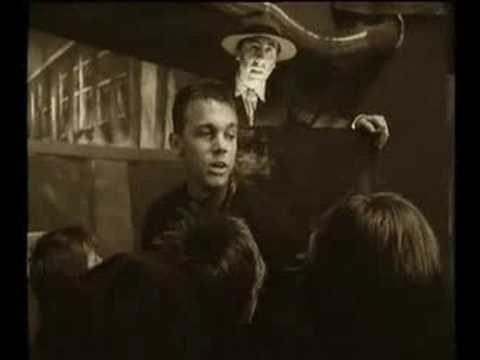
The camouflage The Great Commandment (1987) — The camouflage The Great Commandment (1987) (1987) Director: Rainer Thieding Era: Late Cold War Synth-Pop Era (1987) - West German electronic pop breakthrough period, characterized by dystopian anti-authoritarian themes, Depeche Mode-influenced minimalism, and the global rise of European club culture crossing into U.S. dance and alternative markets. A high-value archival object representing the apex of West German synth-pop's international breakthrough moment. Documented production details (specific studio, shoot dates, director, film format) make this an unusually well-provenance-tracked music video artifact for the period. Its allegorical narrative, confirmed 35mm production, and chart-historical significance across European and U.S. markets render it essential for any research collection covering 1980s electronic music, Cold War pop culture, or transatlantic music video history. Context: Released in September 1987 by Camouflage, a synth-pop trio from Bietigheim-Bissingen, West Germany, 'The Great Commandment' emerged at the intersection of Cold War European youth anxiety and the global expansion of electronic club culture. The video's factory setting and robotic authority figure served as a pointed allegory for institutional control and youth resistance — themes resonant in divided Cold War Europe. The single crossed from European charts (peaking at #14 in Germany and Top 10 in over 20 countries) into the U.S. Billboard Dance Club Songs chart, where it reached #1 for three non-consecutive weeks, an exceptional feat for a West German debut act. Its MTV rotation amplified Camouflage's transatlantic reach and positioned them alongside Depeche Mode and Kraftwerk in the global electronic pop consciousness. Director notes: The video was filmed on 14 and 15 November 1987 at Butenholt-Studios in Kröppelshagen, West Germany, on black-and-white 35mm film. Post-production applied a sepia/amber tonal filter, giving the original broadcast version a warm, grainy dystopian aesthetic. The narrative depicts the three Camouflage band members (Heiko Maile, Marcus Meyn, Oliver Kreyssig) performing amongst a crowd of children inside a factory setting. The plot centers on children protesting a robotic spokesperson on a stage; one child discovers a hidden control panel beneath the stage, revealing the spokesperson to be a mechanically controlled robot, which then malfunctions and collapses. The band and children subsequently depart the factory. The video's anti-authoritarian allegory — youth dismantling imposed mechanical control — directly mirrors the song's lyrical themes of societal suppression and blind obedience. Distributed by Warner Music. A 4K Director's Cut restoration was released in 2025, returning to the original black-and-white 35mm presentation.
Source: radarchive.org
Part of RAD Archive · Watch in the documentary