The Smiths — Stop Me If You Think You've Heard This One Before
JUL 01 1987 · 12:00
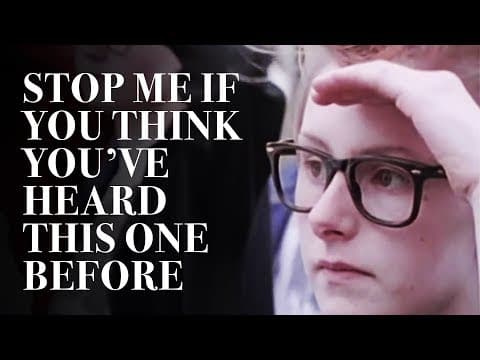
The Smiths — Stop Me If You Think You've Heard This One Before (1987) Director: Tim Broad Era: Late Jangle-Pop / Post-Punk Twilight (1987) - Final creative chapter of The Smiths, concurrent with the release of Strangeways, Here We Come and the band's imminent dissolution; UK indie scene at peak cultural visibility. High-tier archival document of The Smiths' final year, notable for its intersection of geographic specificity (Salford Lads Club), literary iconography (Oscar Wilde), and censorship history (UK broadcast ban). Directed by Tim Broad, whose premature death in 1993 limits his catalogue, this video holds dual significance as both a primary Smiths artefact and a record of a key but under-documented director's practice. The warm, muted, film-textured visual palette — confirmed by quantitative metrics (brightness 67.9, saturation 47.8, warm temperature 2.10) — authenticates the analogue grain aesthetic of late-1980s British indie production. Essential for study of music video as cultural document, regional identity, and censorship. Context: Produced during the final weeks of The Smiths as a functioning band, this video captures the group's visual identity at its most codified: Salford locations, literary iconography, and the Morrissey lookalike motif crystallise years of carefully constructed imagery. The song was banned from UK daytime broadcast by the BBC following the Hungerford massacre of August 1987, making the video a document of censorship-era British media politics as much as a promotional artefact. Its international release only — across North America, Europe, Australasia, and Japan — meant the video circulated globally while remaining largely invisible domestically, amplifying the mythology of The Smiths as a band perpetually at odds with British cultural institutions. Filmed at the Salford Lads Club, a site already canonised by the 'The Queen Is Dead' LP sleeve photograph, the video layers self-referential geography onto the band's closing chapter. Director notes: Broad directed this video concurrently with 'Girlfriend in a Coma', both produced for the Strangeways, Here We Come album singles campaign in 1987. The video opens with a photograph of Oscar Wilde affixed to a brick wall — a recurring Smiths visual motif — and centres on a group of Morrissey lookalikes cycling through Manchester and Salford, passing landmarks including the Salford Lads Club. The deliberate casting of lookalikes creates a hall-of-mirrors conceptual statement consistent with Morrissey's self-mythologising persona. Morrissey himself recalled Broad's involvement in his autobiography. The video was withheld from UK release following the BBC's ban of the song in the aftermath of the Hungerford massacre due to a lyrical reference to mass murder; it was released in North America, Europe, Australasia, and Japan.
Source: radarchive.org
Part of RAD Archive · Watch in the documentary