99 Posse - Corto circuito (videoclip)
1998
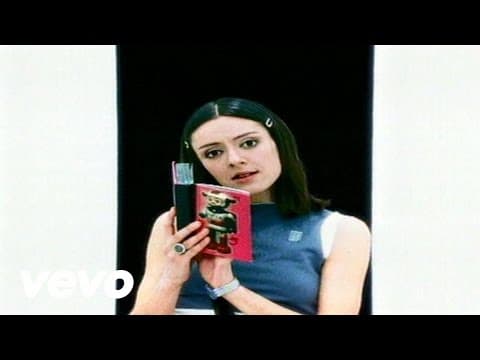
99 Posse - Corto circuito (videoclip) (1998) Era: Italian Posse Movement / Late-90s Underground Hip-Hop (1998) - Peak period of centri sociali-rooted political rap in Italy, fusing drum 'n' bass, reggae, and Neapolitan dialect into a militant sonic identity. High curatorial value as a primary audiovisual artefact of the Italian posse movement at its peak. The video pairs with a landmark album that bridged underground centri sociali culture and major-label distribution in Italy. Alongside companion videoclips from the same album (Me siente?, Focolaio, Quello che), it forms a coherent visual record of 99 Posse's 1998 era and constitutes essential source material for any archive of 1990s Italian political music culture. Context: 99 Posse emerged from Officina 99, a centri sociali in Naples founded in 1991, making them one of the flagship acts of the Italian posse movement, a network of politically radical hip-hop collectives tied to squatted social centres across the country. The 1998 album Corto Circuito deepened the group's stylistic range, absorbing drum 'n' bass and trip-hop influences into their established reggae/rap framework, at a moment when Italian underground hip-hop was negotiating between local militant identity and global electronic music trends. The group's prezzo politico model, releasing all albums with 'Don't pay more than...' stickers, extended their anti-market ideology directly into distribution. This video belongs to a cluster of 1998 videoclip releases supporting the album on Sony Music Italy. Director notes: The video is catalogued on Apple Music (ID: 1538365526) and IMVDb under the 99 Posse artist page (imvdb.com/n/99-posse) with a 1998 date, but carries no director attribution in any publicly available indexed record. The album was produced by Claudio Ongaro for Novenove label and recorded across Naples, Turin, and London. Given the group's strong DIY/centri sociali ethos and political-price distribution model, production was likely handled in-house or through the Novenove infrastructure, though this cannot be confirmed for the video specifically.
Source: radarchive.org
Part of RAD Archive · Watch in the documentary