Journey — Separate Ways (Worlds Apart)
JUL 01 1983 · 12:00
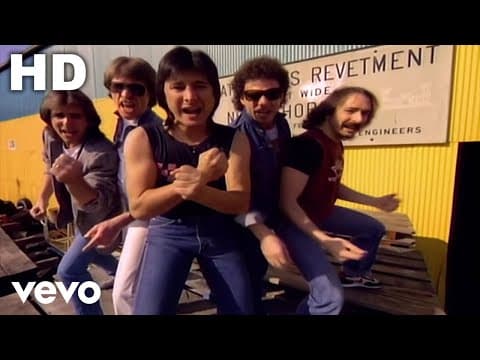
Journey — Separate Ways (Worlds Apart) (1983) Director: Tom Buckholtz Era: Early MTV Era (1983) - The formative period of the music video as a commercial art form, when major arena-rock acts were first compelled to produce concept clips for MTV rotation, often with little creative infrastructure or established visual grammar to guide them. Extremely high. This is one of the most culturally discussed music videos of the early MTV era — simultaneously a chart-performance artifact (#8 Billboard Hot 100), a critical cautionary tale (MTV's 25 Worst Videos, 1999), and a pop-culture touchstone rehabilitated by Stranger Things (2022). It represents a pristine document of the pre-grammar music video moment and Journey at their commercial apex, making it essential for any archive covering early-80s rock visual culture, MTV history, or the sociology of camp aesthetics. Context: Released in February 1983 as the lead single from Journey's 'Frontiers' album, 'Separate Ways (Worlds Apart)' arrived at a pivotal inflection point in American rock's relationship with visual media. MTV had launched in August 1981, and by early 1983 was actively reshaping how arena-rock acts were perceived commercially. Journey — a band that had built its audience entirely through touring and radio — resisted the format, with vocalist Steve Perry explicitly opposed to choreographed video production. The resulting clip, shot on the Louisa Street Wharf in New Orleans, became an inadvertent cultural artifact: a document of the pre-grammar phase of the music video medium, where commercial-director sensibilities met arena-rock iconography without any established visual rulebook. The video's legacy is paradoxically dual: it peaked at #8 on the Billboard Hot 100 and #1 on Top Tracks, yet was voted 13th on MTV's 1999 list of the 25 Worst Videos of All Time, and was famously mocked on Beavis and Butt-Head. Its 2022 resurgence via Stranger Things Season 4 cemented its status as a defining artifact of early-80s pop-rock nostalgia. Director notes: Buckholtz directed the video on location at the Louisa Street Wharf in New Orleans, Louisiana, produced by John Diaz for Columbia Records. The shoot was largely improvised and autonomous — Buckholtz later admitted to the Golden Age of Music Video (2011) that the infamous air-instrument concept was his own idea, stating 'That was me.' The production was complicated by a blustery wind off the Mississippi River, the unplanned arrival of a British naval vessel that interrupted filming, and onset personal tensions. Buckholtz operated with significant creative freedom: 'There was a lot of let's try this or let's try that — a lot of it shot on the fly.' The video featured over 50 camera moves choreographed with Columbia Records Art and Creative Services. The conceptual framing — that the female protagonist (local model Margaret Olmstead) dreams the entire video while asleep in bed with headphones on — was explained by producer John Diaz as the intended narrative anchor.
Source: radarchive.org
Part of RAD Archive · Watch in the documentary