Lita Ford — Can't Catch Me
JUL 01 1988 · 12:00
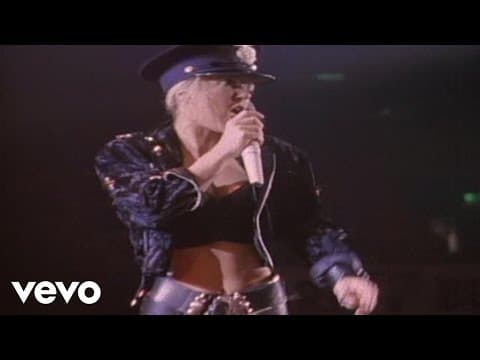
Lita Ford — Can't Catch Me (1988) Era: Late MTV Golden Era / Hard Rock-Glam Peak (1988–1990) - The closing years of glam metal's commercial dominance, defined by high-energy performance videos, saturated color palettes, leather-and-lace fashion, and female hard rock artists asserting visibility on mainstream MTV rotation. High curatorial value as a primary artifact of female hard rock visibility during glam metal's commercial apex. The video's quantitative profile — fast editing (2.06s ASL), high saturation (124.68), warm toning, and active motion (8.02) — is textbook late-80s MTV hard rock production, making it an ideal comparative benchmark. Its significance is amplified by Lita Ford's unique career trajectory and the relative scarcity of female-fronted entries in the glam-metal video canon. Tier 1.5 reflects strong archival and research utility, pending director confirmation which could elevate it further. Context: Lita Ford's late-1980s output sits at a historically significant intersection: she was one of the very few female artists to achieve mainstream commercial success within the male-dominated glam metal ecosystem of the Sunset Strip and MTV. Having emerged from The Runaways — one of rock's pioneering all-female bands — Ford's solo career on RCA Records represented a calculated hard rock positioning that both embraced and subverted genre conventions. 'Can't Catch Me' reflects the era's formula of high-energy performance aesthetics, aspirational independence themes, and the visual language of leather, volume, and spotlight theatrics. The video's warm-saturated palette and fast editing pace align precisely with the MTV broadcast aesthetic of 1988–1990, when hard rock dominated TRL precursors and late-night video blocks. Director notes: Web search was unavailable. No production details, director name, or crew credits could be verified for this specific music video at time of annotation. This field should be updated when archival sources or music video databases (e.g., MVDBASE, AllMusic) can be consulted.
Source: radarchive.org
Part of RAD Archive · Watch in the documentary