Maurice Tuchman (curator-organizer) — Art and Technology Program — LACMA
1971
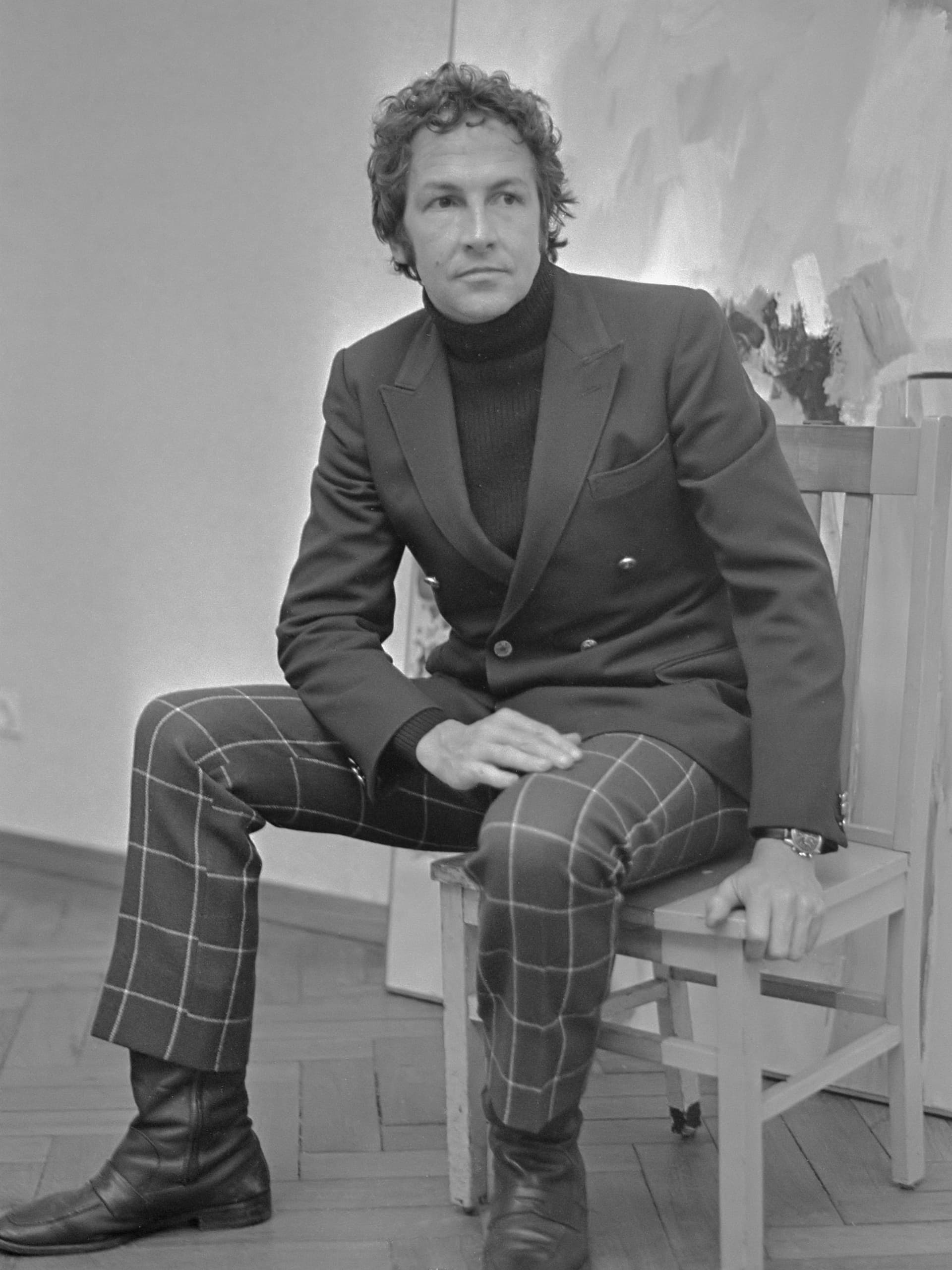
Artists: Maurice Tuchman (curator-organizer), Jane Livingston (associate curator) · Year: 1971 · Medium: Institutional program pairing artists with Southern California technology corporations · Substrate: Multi-year residencies in which artists worked with engineering staff at corporations including IBM, Disney, Lockheed, Rand, Litton Industries, and others · Place: Los Angeles, USA · Institution: Los Angeles County Museum of Art (LACMA) Maurice Tuchman's Art and Technology Program at LACMA, run from 1967 through 1971, was the largest institutional attempt of the period to pair serious contemporary artists with industrial research-and-development corporations. Tuchman placed more than seventy-five artists — including Robert Rauschenberg, Claes Oldenburg, Andy Warhol, James Turrell, Roy Lichtenstein, R. B. Kitaj, and dozens of others — in residencies at major Southern California corporations, where they collaborated with engineering staff on projects that combined artistic intentions with industrial capabilities. The results were exhibited at LACMA in 1971 in a sprawling exhibition documented in a 400-page catalog. The program was larger in scope than E.A.T.'s 9 Evenings or the Bell Labs artist-residency tradition. Tuchman's ambition was essentially institutional: to normalize artist-engineer collaboration as a mode of museum-commissioned contemporary practice. Many of the resulting works were compromised — the corporate partners were often reluctant to grant real creative access, and some artists produced work that did not match their normal output — but the aggregate documentation remains a primary source on 1960s art-industry relationships. The program's historical reputation is mixed. Lucy Lippard and other critics argued at the time that Art and Technology was a vehicle for military-industrial-complex laundering; defenders argued that the institutional precedent it set mattered regardless of any individual work's success. Both arguments retain force. Tuchman remained at LACMA for decades and shaped its collection across his tenure. Lore The Art and Technology catalog (published 1971 by LACMA and Viking Press) runs to 400-plus pages with extensive documentation of every residency. The catalog is a primary-source document on 1960s American industrial-artist relations and remains widely consulted. Some residencies produced nothing exhibitable; others produced works that were central to the participating artists' subsequent careers. Richard Serra's residency at Kaiser Steel, which he later said shaped his understanding of material weight, is one of the program's most quietly influential outcomes. Sources • Tuchman, Maurice — A Report on the Art and Technology Program of the Los Angeles County Museum of Art, 1967–1971 (LACMA / Viking, 1971) • LACMA — institutional archives • Lippard, Lucy — Six Years: The Dematerialization of the Art Object (University of California Press, 1997)
Source: daoracle.com
Part of Digital Art · Watch in the documentary
More from Digital Art
- Dan Graham — Body Press and closed-circuit investigations
- Lillian Schwartz — UFOs and later Bell Labs films
- Waldemar Cordeiro (organizer) — Arteônica — first Latin American computer-art ex
- George Stiny — Shape Grammars and the Generative Specification of Painting and S
- Antoni Muntadas — Between the Lines — early Muntadas media work
- Centers — Vito Acconci's mirror-like video